Monday, March 20, 2017

Movie Review: Logan

So here we are, the final Hugh Jackman as Wolverine film, and man was it good!

Director James Mangold's Logan takes place in a nearly mutant-free near future wherein Logan lives a quiet life as a limo driver and tries his best not to be noticed.

He does have secrets however, and early in the film these begin to catch up with him.  He's harbouring a fugitive, running out of time and is about to be met with something he'd never expected; new mutants.

The story moves between extremely violent (this is definitely not a film for children) and surprisingly heartfelt, and much of this comes down to the work of Hugh Jackman and Patrick Stewart.

The film is a lot of fun and honestly, it may be the first X-Men film I'll go to the trouble of purchasing since X-Men: First Class.


Wednesday, March 15, 2017

Book Review: Iron Council

China Mieville's third novel set in the fictional world of Bas-Lag, Iron Council really should have worked for me, as it mixed his world with Western tropes, but as compared to Perdido Street Station and The Scar, it fell a little flat for me.

Both previous novels had really compelling characters and settings, while Iron Council focused largely on concept.  An escaped train houses a small society attempting to outrun those after it, but when compared to books like Christopher Priest's Inverted World, which had a much more compelling lead, I just found the book didn't hold my interest as well as his other titles.

Although not my favourite steampunk novel, I'm still a big enough fan of the author that I'll keep coming back for more.

Tuesday, March 14, 2017

Book Review: Norse Mythology

Here was everything I knew about Norse Mythology last month in a nutshell.

You've got Thor and Loki and Ordin... (mostly gleaned from The Mighty Thor comic from Marvel), Odin is the dad, Thor and Loki are brothers, and although Thor isn't that bright, he's pretty straightforward, and although Loki is pretty much a big liar, every once in a while he does something good.

There are Ice Giants (again, Marvel Comics)

There's a terrifying Squirrel (shown best in the comic series The Unbeatable Squirrel Girl - also a Marvel comic)...

J.R.R. Tolkein used a bunch of Norse Mythology when creating Middle Earth.

....and, yup.  That's about it.

So when I read Neil Gaiman's latest, Norse Mythology, I wasn't exactly sure what to expect.  What I got was a pretty nifty overview of the topic, from creation myths straight through to Ragnarok - the end of times for the Norse gods.

The stories are all quite readable, a lot of fun, and educational in a way I wasn't expecting.  It definitely left me interested in finding out more, which for a book of this type, is pretty much the goal.

A great read!

Monday, March 13, 2017

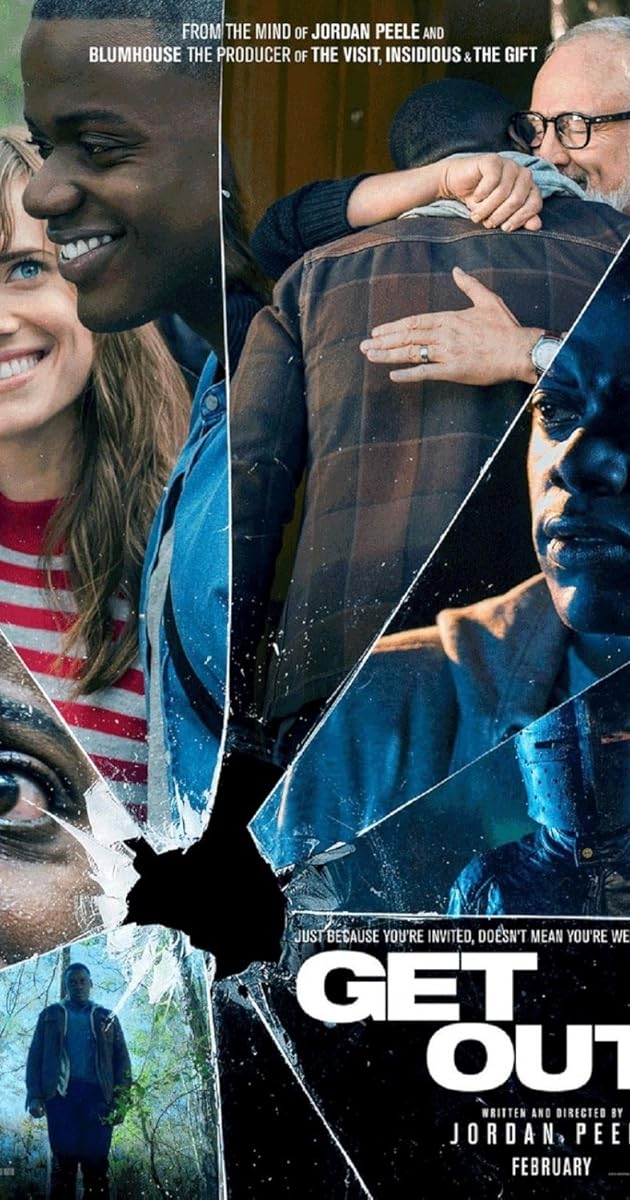
Movie Review: Get Out

After spending the last few months watching all sorts of Oscar-nominated films, it's finally time to get back into my regular viewing habits, which brings me to Horror, Science Fiction and Fantasy.

My first must-see film of the year was Jordan Peele's Get Out.

The film follows Black photographer Chris Washington (Daniel Kaluuya) on his first visit to his white girlfriend Rose's (Allison Williams) family home. Although friendly at first, things take a turn for the puzzling and then move towards terrifying throughout. As the story depends on a number of twists and turns, I hesitate to spoil anything, but I can say it's well worth the watch and left me quite impressed with how effectively comedy and horror can play off of each other.

A really good film.

Tuesday, March 7, 2017

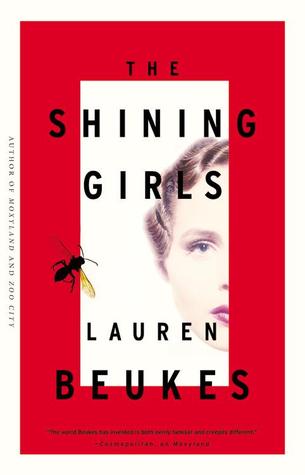
Book Review: The Shining Girls

Lauren Beukes 2013 novel The Shining Girls is a little tricky to peg down in terms of genre. The story works as a thriller, a time travel story, as well as a mystery, and showcases the city of Chicago over a sixty-year span.

To describe the book I'm going to have to get into the twists and turns a little, so sorry for the four-year-old spoiler, but if you want to read the book cold here is my short review.

A fast read, really intriguing, included large sections where I simply could not put the book down.

Back to the longer review; the story focuses on Harper Curtis, a drifter in depression-era Chicago who finds his way into a house that allows him to travel throughout sixty years of time, starting in 1931 when he finds the house and ending in 1993. Inside the house Harper finds trophies of the Shining Girls, women he has/will kill to continue to power the unique abilities of the house. The story involves Harper bouncing back and forward through time on his murder spree and equally focuses on one of the shining girls, Kirby Mazrachi, who survives her attack and then begins to work to track down this terrifying killer who she first saw as a child and next years later when he attempted to kill her.

As a character, I was pretty impressed with Kirby, you see her at three distinct ages in her life and I found I was really rooting for her as she attempts to make sense of the nonsensical.

A pretty great read and an author I'm definitely looking forward to following.

Thursday, March 2, 2017

Book Review: Foundation

Having read an awful lot of Science Fiction over the years I'm pretty well read in the field. Not to an academic level mind you, but definitely to one that leaves me pretty familiar with the names and major works of any number of writers depending on the decade. So having just finished working my way through David Pringle's Science Fiction: The 100 Best Books, I thought I should go back and catch some of the classics I had missed through the list or on my own.

Which brings me to Asimov's Foundation (1951), actually more a collection of short stories and itself the beginning of one of the most highly regarded series in Science Fiction. The story begins with a scholar named Hari Seldon who has come up with a science called psychohistory, which allows him to predict the future on a massive scale, both in time and number of people effected.  The science doesn't work on predicting any individual person, but instead planetary civilizations.


Seldon has discovered that the galactic empire he lives in is soon to collapse into a dark age, but he believes that his science can be used to dramatically decrease the projected time of barbarism from 30,000 years to a mere 1,000 by transporting a small group of 100,000 people to an isolated planet on the outreaches of the empire.  The rest of the book follows his foundation over roughly the first two-hundred years of his plan.  Each section features a different main character and a different challenge facing his new society.

The stories work as intricate puzzles and although his characters are a little two-dimensional as compared to Bradbury or Heinlein's, I really enjoyed the logic behind each problem and solution, as well as the fact that as each group solves a problem in their own story, they, or their solution, has become the problem in the next story.

Although I had read Foundation back in high school, I had never got around to the rest of the series, so I figured that I should start with book one to get my bearings.

A fascinating read.

Tuesday, February 28, 2017

Oscar 2017: Best Picture Nominees pt. 3

All right, the Oscars aired last weekend, but I still hadn't got around to the final three Best Picture nominees so here you go:

ArrivalDenis Villeneuve's Arrival sits quite nicely as a high concept science fiction film that in many ways is a throwback to late 70s science fiction focusing on issues of language like Riddley Walker, Juniper Time or The Ophiuchi Hotline. The film follows Earth's reaction to the appearance of alien spacecraft and their attempts to understand the language of the creatures within. An intriguing film that asks for multiple viewings.

Hacksaw Ridge

Mel Gibson's Hacksaw Ridge is almost two films; the first half being the story of a Seventh Day Adventist named Desmond Doss (played by Andrew Garfield) who enlists in the American military during the Second World War, but attempts to work in such a way as to remain true to his religious convictions, specifically to never handle a gun. The film moves from his initial attempts to impress the importance of his beliefs upon his superior officers and moves into a courtroom drama towards the halfway point. The second half of the film follows Doss into active service and works hard to show the horror of the Pacific theater of war. It's not for those with a weak stomach, but strives to show a different measure of the term heroism. In the end I'm not sure if I would ever re-watch it, but I certainly enjoyed it the first time.

Manchester by the SeaKenneth Lonergan's Manchester by the Sea is a drama following a man who has been put in the position of looking after his teenaged nephew after the boy's father has died. The story is straight-forward, but as with Fences is full of deep characterization and some pretty amazing performances. Well worth the watch.