Saturday, October 31, 2015

Bookmonkey visits Hemlock Grove: Post Twelve

And here we end our visit to Hemlock Grove.

In the end, the show is a different take on a classic monster mashup, think Frankenstein meets the Wolf Man but in an updated version.

Throughout the season, the series attempts to show how these mythical beings would act and interact in a contemporary setting. In many ways it can be considered Magic realism, but in terms of a Horror, rather than a Fantastic setting.

In many ways the show is a success in what it sets out to do; the vampire, werewolf, and monster elements work in a "real world" setting.  In many ways the story works more as a thriller with horror elements than simply a classic horror story.

The pacing of the series does sometimes work against it - as the story attempts to stretch across the course of thirteen episodes, most of the episodes work, but I ended up feeling like the series could have worked at ten, rather than thirteen, episodes.

The series works best when it focuses on the growing relationship between Peter and Roman, showing how their friendship changes and grows during the course of the murder investigation, and although my personal favourite character was Shelley (the series version of the Frankenstein's monster), the human side of these characters is what worked best for me.

In the end, I'm not sure whether I'll be following up with the later seasons - but as the first season was a pretty straight adaptation of the novel, I'd like to see what the creators end up doing with these characters once the go off book.

Thanks for hanging out with me for another Ocotober!

Wednesday, October 28, 2015

Bookmonkey visits Hemlock Grove: Post Eleven

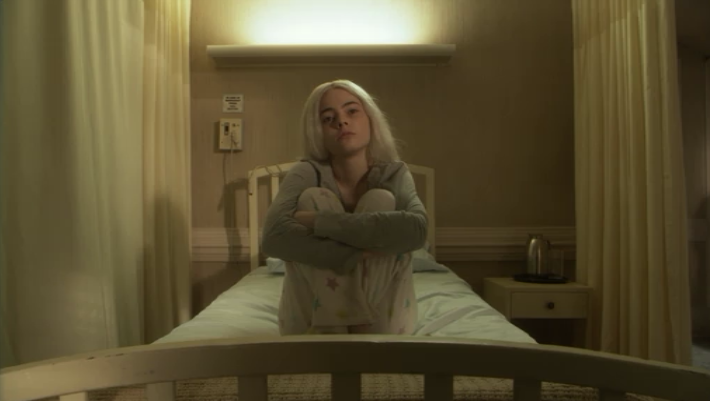
Moving away from the series various werewolves, vampires, Frankenstein's Monsters, and psychics, I thought today would be a good day to look at the series regular human character, Christina Wendall, (played by Freya Tingley - pictured left).

A quick side note; of the kids in the series I haven't forgotten about Letha Godfrey (Roman's cousin), but as she ends up pregnant in the second episode by, in her own words, an angel, I'm trying to stick to the one character without an obvious and direct supernatural connection to the series.

Christina is introduced in the pilot as the series answer to Twilight's Bella Swan.  She's a highschool student looking to be a writer, and in first meeting Peter, directly asks him if he is a werewolf.

Throughout the series, Christina ends up finding one of the killer's victims, and ends up in the local insane asylum - her hair changes from brunette to white over the course of the season and a number of people she knows end up being the victims of the killer.

As she is the one main child character who doesn't have obvious supernatural powers or a supernatural origin, she is, in mny ways, the easiest person to relate to in the series, allowing the audience to see the horror in the town through her eyes.

Sunday, October 25, 2015

Bookmonkey visits Hemlock Grove: Post Ten

The more genre television I watch, the more often we spend an episode inside a character's head, usually allowing them to learn important plot points and to allow the audience to see more thematic elements of the story overall.

Hemlock Grove does this in the eigth episode, where Vampire (sorry Upir) Roman is drugged and falls into a coma.  The next episode balances events around Peter, the Monster Hunter, and Roman's cousin Letha.

Interestingly, in the dream sequence, Roman's sister is played by a different actress, which is a little strange as the actress who plays her normally, Madeleine Martin, is under such significant makeup (and the regular use of a body double to show her character's height), that it seems like you could have simply used the actress you already had...

Although the episode does increase the eeriness of the series overall, I tend to find these stories a little light on plot development, and was happy to get back to the main story over the next few episodes.

Thursday, October 22, 2015

Bookmonkey visits Hemlock Grove: Post Nine

The Sins of the Fathers.

Much of episode seven works in flashback, describing the backstory of Peter's mother and Uncle, how have been having an affair since the pilot.

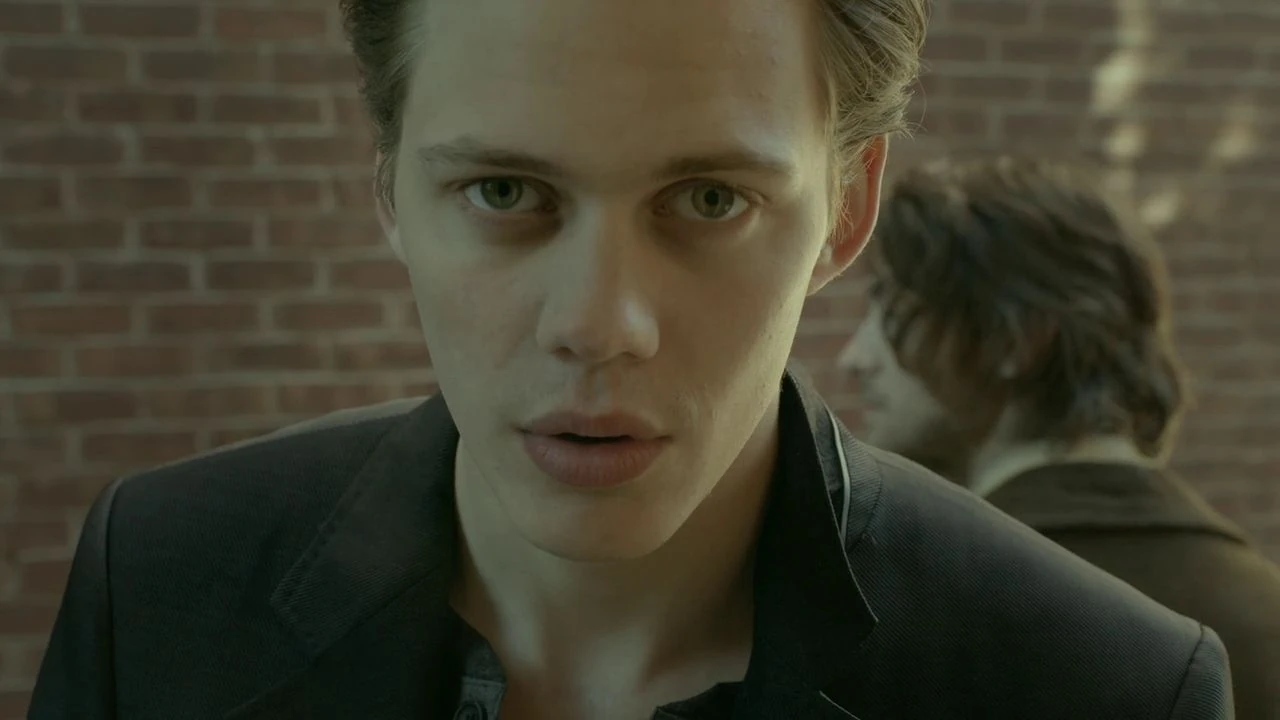
Past that Roman (pictured left) and Peter go their own ways, and each make some pretty horrible, and horrific, mistakes.

Part of the appeal of a multigenerational horror story is watching history repeat itself in different ways, and just as Olivia (Roman's mother) makes what may be a disastrous connection, Roman goes one step further, and takes part in what may be the most horrific event in the series so far.

Roman has the ability to force his will on others - simply stated, if he can look someone in the eye, he can effectively control their actions and or memories.

At first this seems like a pretty amazing ability, but think about it for a minute.

With an ability like that, all the check on your own behaviour would have to come from your own willpower, as anyone else could be controlled into going along with you.

Actually, that sounds pretty awful.

Monday, October 19, 2015

Bookmonkey visits Hemlock Grove: Post 8

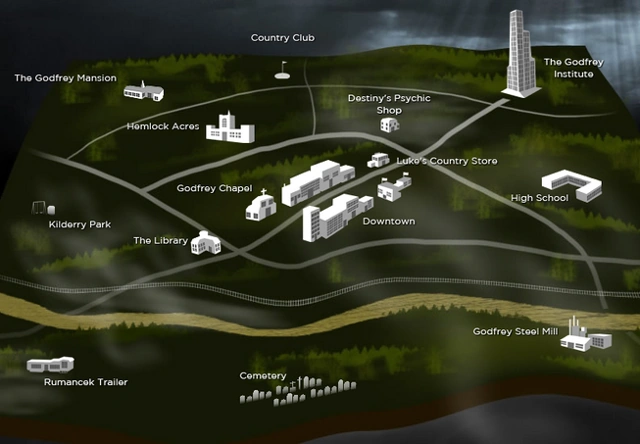
The Geography of Hemlock Grove

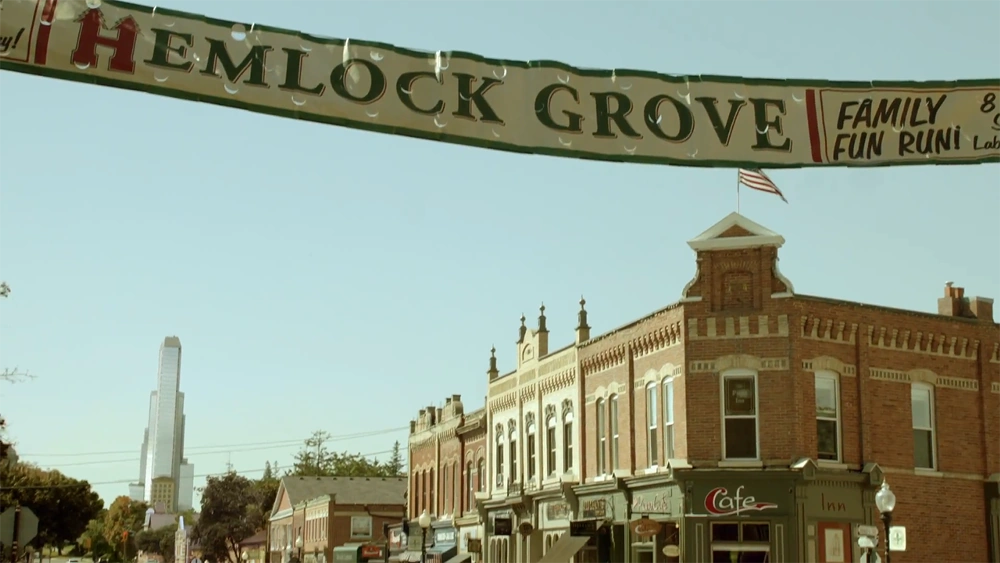
Five episodes into the series and I'm growing more than a little curious about the geography of the town.  In reading the original book, I actually felt like the town was a sort of analogue for Detroit, a city where industry has left, but as the city still has a massive medical complex in The Godfrey Institute, it must have more than one skyscraper right?

Apparently, not so much (pictured right).  In the series the town appears to have more in common with Gilmore Girls Stars Hollow than a city, and although it does have both a small time charm and all sorts of quirky characters, the comparison pretty much ends there.

As with many things, I was able to find a map of the town online (at the Hemlock Grove wiki) which does end up looking like a tiny mining town with a massive single skyscraper dominating the skyline.

Strange, but (fictionally) true.

Friday, October 16, 2015

Bookmonkey visits Hemlock Grove: Post Seven

Okay, so there's actually both a Frankenstein (the scientist) and a Frankenstein monster in Hemlock Grove.

After four episodes filled with Vampire (sorry, Upir) and Werewolf stuff, the idea of a mad scientist creating a monster was a heck of a lot of fun for me.

Actually episode four does a nice job of both moving the murder mystery forward and fleshing out a one of the supporting characters through flashback; specifically Dr. Clementine Chasseur (played by Kandyse McClure, pictured left).  Initially in the series, she's introduced as an officer of U.S. Fish and Wildlife, but things begin to move pretty quickly to show she's covering for something.

Part of what I'm enjoying at this point is the fact that the show seems to be working to have traditional monster archetypes (vampire, witch, werewolf, etc.), but then attempts to deconstruct them; the witch has magic, but doesn't use it as it causes more trouble than it's worth, the werewolf hides his nature for fear of scientists, like the mysterious Dr. Chausseur and her interest in Peter.

So far, as an adaption, I'm definitely preferring it to the original book, which moved, chapter by chapter, through different narrative techniques, often feeling more style over substance, but the different transitions seem to work much better in a televised format.

Wednesday, October 14, 2015

Bookmonkey visits Hemlock Grove: Post Six

After watching a third of the first season, I think I'm finally starting to get what Hemlock Grove is putting down.

Currently, the show has about five different storylines going on, ranging from the friendship between to Peter and Roman, to the overall murder mystery and the bizarre focus on the Ouroboros imagery throughout.

What finally hit me this episode was how the show is actually laying each storyline out and moving them forward that their own pace - there really is no guarantee that a plot point (like Shelley's (pictured right) strange disfigurement or, even stranger, random glowing) will  lead to anything in a specific episode.

The stories move at different paces and although each episode touches on them, the series works a little like a soap opera, in that it always has something going on, but never seems to give a conclusion for anything.

As I'm definitely sticking with the series through the first season, I'm interested to see how it will all end up, and I'm hoping that my understanding of the pacing will play out.