Russell Hoban’s 1980 dystopian future novel Riddley Walker begins as follows:
On my naming day when I come 12 I gone front spear and kilt a wyld boar he parbly ben the las wyld pig on the Bundel Downs any how there hadnt ben none for a long time befor him nor I aint looking to see non agen.
The book, narrated by a young man called Riddley Walker, takes place some two thousand years after the end of our civilization in Inland (England), and is narrated by Riddley in a style that often requires passages to be read out loud if you'd like to make sense of them.
Although it felt a little gimmicky at first (I found Trainspotting, by Irvine Welsh, to be a similar reading experience initially), the writing style actually forces the reader to slow down and try to make sense of Riddley's world, which in many ways is exactly what he is trying to do throughout the story. In that way, the style definitely works, throwing the experience off kilter like Christopher Nolan's Memento (2000), which also uses format to put the viewer in the same place as the protagonist.
In some ways the novel reminded me of John Crowley's Engine Summer, as it also takes place well in a future where we are long gone and not particularly thought of at all, but for me Riddley works a little better with the language issue - I had plenty of "A HA!" moments while reading and deciphering his story, and the book would definitely hold up well upon rereads.
A lot of the science fiction I've read over the years tends to put the blame on "the other", whether an alien invasion, technology gone wild or even "the bomb", but every once in a while I hit a story that puts the blame for its setting squarely on society, and J.G. Ballard's 1975 novel High-Rise fits that bill exactly.
The book focuses on the occupants of a luxury high rise building, which bears a lot in common with the concept of an areology, wherein a densely populated building includes schools, shopping, entertainment, etc. allowing many of its dwellers to spend their entire lives within.
This book however, focuses on how quickly things can go wrong in a confined environment and in addition to being a hyper-violent often shocking narrative, for me the focus is on how much the occupants work (both directly and indirectly) to ensure no one else sees exactly how bad things get inside the building.
The book was dark, harrowing, and surprisingly effective, and is well worth the read.
Having recently finished the Divergent series by Veronica Roth, my next YA series selection was kind of tricky; over the years my kids have read an awful lot of these series and so I have a pretty big backlog of "You gotta read this Dad" titles.
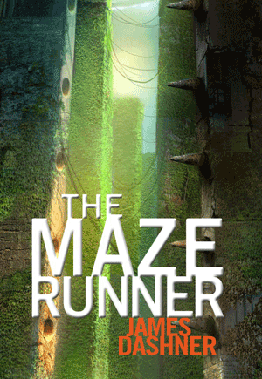
But an upcoming movie and an intriguing premise led me to a pretty easy selection, The Maze Runner, by James Dashner.
The book (the first of four) follows a young man named Thomas who awakens in an elevator lifting him into a wooded glade, populated by about 50 young men and surrounded by massive walls.
Each day four doors open in the walls and allow access to the Maze, a setting intriguing enough to read the book alone, but what Dashner has done here is to introduce a lot of great characters and show us the society they have created in this strange new world.
I could count exactly one time in the entire novel in which I disagreed with an action taken by a character - I'm not saying I liked every choice everyone made, just that they all seemed to follow the logical conclusions given the character and the situation. For YA fiction, this is a pretty great score, as I've had some less than stellar responses from other series I've read over the last few years.
I haven't yet read the other three books in the series, but if they follow the speed and concepts in the first novel, I'm pretty sure I will have an entertaining few months ahead of me.
Well worth checking out.