Showing posts with label Guillermo Del Toro. Show all posts

Monday, February 12, 2018

Moive Review: The Shape of Water

Ok, so no surprise, I really really loved Guillermo Del Toro's 2017 film The Shape of Water.  

Focusing on the relationship between a woman (Sally Hawkins) and an aquatic creature being studied at a Baltimore research facility in the early '60s, the film clearly borrows some inspiration from the classic 1954 film The Creature from the Black Lagoon, but is such an engrossing look at a relationship unlike any I had ever seen before that I have a little trouble describing it.

Honestly, do yourself a favour and go see this if you've got the time, because honestly, it is simply a delight to see, mixing the mundane with the fantastic and the hopeful with the horrific.


Wednesday, October 26, 2016

Bookmonkey vs The Hoard: Post Eleven - Mimic (Director's Cut)

Although it's not my favourite of his films, the first horror film by Guillermo del Toro I ever saw was the 1997 film Mimic. The film focuses on two scientists who introduce a genetically modified cockroach to New York City to cure an epidemic causing deaths among children. Three years later, the introduction of these cockroaches end up having a terrifying effect.

At the time my wife and I saw the original film, our complaints were "It was too dark", but the imagery really stuck with me, so year's later, when I heard a director's cut was coming out, I was pretty interested in seeing the differences.

For starters, the movie is much brighter than I recall it, with vivid blues and oranges visible throughout the film. Considering the film is largely a B-Movie monster movie, I would still consider it a worthwhile experience for horror movie fans. It's definitely flawed in a number of spots, but the commentary track and other assorted features give an excellent discussion on how mixing an independent director together with a studio can go wrong (especially early in the director's career).

The film does have a lot of neat visuals going for it, and as a big del Toro fan myself, I consider it a well worth addition to my collection, but if you're interested in monster movies, there are other pictures I'd recommend seeing instead.

Tuesday, November 10, 2015

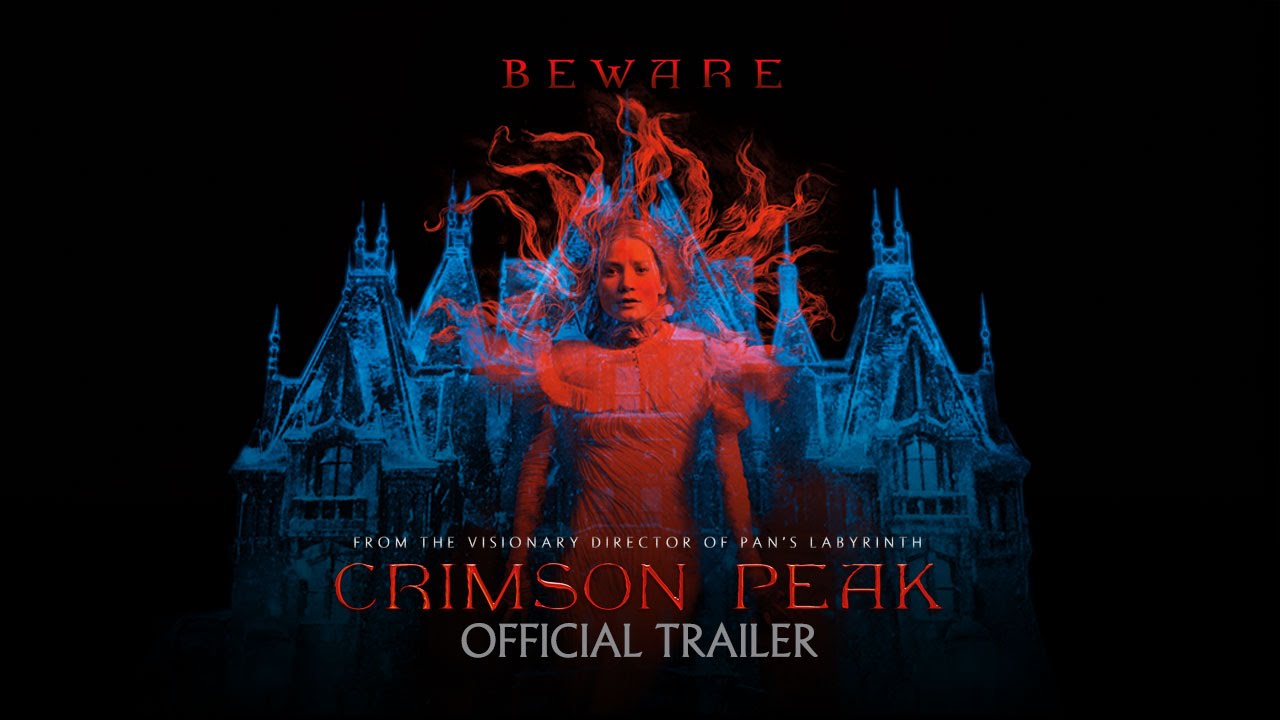
Movie Review: Crimson Peak

So let's start with an admission. I'm a pretty big fan of Hammer Horror films from the 1950s and 60s; honestly, if I chose a favorite director based on number of their movies I like, Terrence Fischer (1904 - 1980) would easily be in my top ten. Classics like Horror of Dracula (1958), The Curse of Frankenstein (1957), and The Mummy (1959) are still all incredible effective today, and the climax of Brides of Dracula (1960) may be my favourite defeat of a vampire in any movie I've seen to date... and don't even get me started on The Devil Rides Out (1968) - or you know, just read my post about it here.

Something about a lonesome mansion (or manor, or castle) a romance between an unsuspecting innocent and a suspiciously perfect partner with a dark past, and maybe a ghost or two just work perfectly. Also, looking at it, they also describe all the aspects of Gothic Romance fiction, of which I'm also a pretty big fan.

So earlier this year when it was announced that Guillermo Del Toro would be directing Crimson Peak, I knew I would have to check it out.

After seeing the film, the word I could best use to describe it is "lush", meaning "very rich and providing great sensory pleasure." In many ways the film is best looked at as an experience for the eyes and ears. Yes, there are a number of graphic depictions of violence - fans of Pan's Labyrinth will be familiar with the types of shocking violence that can appear in Del Toro's films. Yes, the movie clearly owes a lot to Daphne Du Maurier's Rebecca and the 1940 Alfred Hitchcock film adaption as well.

At it's heart, the film is a ghost story, and for the two hours it lasted I simply couldn't look away. An incredibly fun film that hit all the marks I look for in this type of story.

Friday, October 31, 2014

Bookmonkey x Penguin Horror Day 31: Endings and Beginnings


Guillermo del Toro begins his introductory essay "Haunted Castles, Dark Mirrors" as follows:

To Learn what we fear is to learn who we are.  Horror defines our boundaries and illuminates our souls, In that, it is no different, or less controversial, than humour, and no less intimate than sex.  Our rejection or acceptance of a particular type of horror fiction can be as rarified or kinky as any other phobia or fetish.

The series covers haunted houses, science fiction horror, psychological horror, gothic horror and swings from subtle to graphic.  With the exception of Ray Russell, I had read most of the selections before, but great fiction is well worth the re-read.

What I like best about the series is just how well the material was respected.  Having a small selection of horror in hardcover is pretty great, especially when introductions, annotations and even some filmographies are included.  Until now, the majority of my collection is mainly comprised of mass market paperbacks, as the genre tends to be left out of the hardcover market.

I do hope the collection gets expanded on, as I for one, would be happy to keep reading wherever it goes.

Thanks Penguin!

Friday, October 24, 2014

Bookmonkey x Penguin Horror Day 24: Haunted Castles

Of the six books in the 2013 Penguin Horror imprint, Ray Russell's Haunted Castles was the only one I had never heard of before.  In effect, I bought this book 50% because I had purchased the others and wanted a complete set, and 50% on trust in Penguin and Guillermo Del Toro.

The book itself is a collection of seven short horror stories written in the 1950s and 60s.  The most famous of these is one called Sardonicus, which was made into a film in 1961 by William Castle.  This movie, called Mr. Sardonicus had actually crossed my radar back when I was in elementary school and looking through a book on the history of horror cinema (yes, I was the monster obsessed kid in my class).  One of the images in the book is the makeup for the main character, Baron Sardonicus, a man whose face has been frozen in a permanent grin, and trust me, as a kid this makeup really freaked me out, but more on the film later, as I'll be checking it out this weekend.

The stories are all pretty great, my personal favourite was called Sanguinarius, which focused on Elizabeth Bathory, a woman famous for bathing in the blood of young girls.  The story, told from her point of view, was really great, and had a pretty great pay off as well.

Like science fiction author Frederic Brown, Russell seems like the type of Horror author that dedicated fans know well, but mainstream audiences may never have heard of - if you have the chance, definitely check out the book, it's well worth the read.

Sunday, October 12, 2014

Bookmonkey x Penguin Horror Day 12: The Raven

Beginning the second of the Penguin Horror collection, Edgar Allan Poe's The Raven: Tales and Poems, I was a little leery.  Although I did fine in English in High School, my university background is in Communications Studies, not English, and I've always felt Poe is much closer to LITERATURE, which makes me a little hesitant to review him.

Then I remember that I'm a blogger, and more importantly a life-long horror fan, so I should be a little easier on myself and realize that the worst thing that could happen is comments on my blog (which is - excluding spam - the best thing that can happen on a blog).

So let's go.  

As with the Penguin Horror Frankenstein, this edition is really gorgeous, the cover-image, the fact that it is a hardcover, and even the fact that the edges of all the pages are black add together to make a beautiful object.  Unlike Frankenstein, however, the book lacks in the extra materials department - no filmography, additional notes, chronological info, etc.  Just the opening essay, and an introduction by S.T. Joshi.  Informative, but as compared to the previous book, it pretty much sticks to the original material and that's it.

The stories are great - although it took me a while to get into the rhythms of Poe's writing, a number of the stories gave me chills (especially Berenicé and The Tell-Tale Heart), and surprisingly a couple were quite funny.  Unlike a lot of horror I've read, the stories tend to be focused in a real world setting, with issues of madness, grief and guilt being the focus, rather than ghosts, goblins and other creatures of the night (although one story does have a mummy), and the poems are also quite a treat.

In the end, I missed the extra materials offered in Frankenstein and did wish that the book had contained the story "The Murders in the Rue Morgue" (one of my personal favourites), but as with any short story collection, certain stories get left out or added for editorial purposes.

Friday, October 3, 2014

Bookmonkey x Penguin Horror Day 3: Frankenstein

NOTE: I have chosen to look at each of the books in the Penguin Horror collection in the order described by series curator Guillermo del Toro in his Introductory essay Haunted Castles, Dark Mirrors: on the Penguin Horror Series. 

Okay, so let’s talk about the book a little first.

The Story
For those who have not come in contact with the Frankenstein story, it’s pretty simple (sorry for the 195-year-old spoilers, but seriously what can you do?), you have a doctor who decides to create life, he does this by putting together parts for a variety of human bodies and creates an eight-foot tall monster that disgusts him so completely that he abandons it almost immediately after creating it.  The rest of the book follows his attempts to remove himself from any responsibility for the creature and the creature’s attempts to live in our world, and failing that, get some understanding from its creator.

Let's just say things do not work out well.

If you've never actually read the original novel, you are in for a huge treat – the story moves along incredibly quickly, is very readable and the tension that builds throughout is second to none.  As this was my fourth or fifth read through, I was pretty happy to come across this description that the doctor gives of his own upbringing (which to be fair, many a first-year English major has likely made this comparison before me):

I was [my parents] plaything and their idol, and something better – their child, the innocent and helpless creature bestowed on them by Heaven, whom to bring up to good, and whose future lot it was in their hands to direct to happiness or misery, according as they fulfilled their duties to me.  With this deep consciousness of what they owed towards the being to which they had given life, added to the active spirit of tenderness that animated both, it may be imagined that while during every hour of my infant life I received a lesson of patience, of charity, and of self-control. (Chapter 1)

And with this sort of upbringing, you would think he would treat his own creation better, but if he had, where would our story be?

The Packaging

First of all, the fact that the book is a sturdy hardcover, with a wonderful cover by Paul Buckley, ensures that it has a prominent location on my living room bookshelf.  The Book comes with an introductory essay by del Toro, a wonderful introduction by author Elizabeth Kostova, and then a great number of extras, including a reading guide, a chronology of author Mary Shelley’s life, and a filmography looking into 21 selected Frankenstein films (more on this Monday)

Wednesday, October 1, 2014

Bookmonkey x Penguin Horror: Day One

So here we are again at the beginning of October, with a month ahead to examine another aspect of the horror genre. In the past I’ve done deep dives into series like Twilight, Hack/Slash, and Saw, and then over trends in horror like Reimaginings. This month I thought it would be best to go back to some of the roots of horror and hit some great literature at the same time. To do that, I’m going to spend the next thirty days diving into the six titles released under the Penguin Horror imprint last year.  This is largely for two reasons:

1) For my birthday two months ago, my friends and family got me the entire collection, and I thought it would be a nice excuse to use them.

2) As someone who has collected horror for decades, I have a massive collection of mismatched, creased, and roughed-up paperbacks and the idea of some very nicely put together hardcover titles in my favourite genre is too good to pass up.

The six titles: Frankenstein, The Raven, The Thing on the Doorstep and Other Weird Stories, The Haunting of Hill House, Haunted Castles, and American Supernatural Tales, were curated by Award-winning filmmaker and longtime horror literature fan Guillermo del Toro, and as I’ve been enjoying his work in film since my wife and I first caught Mimic back in 1997, I thought I would give the collection he put together with Penguin books a shot.

The stories covered throughout the series cover 182 years of the genre (Frankenstein was published in 1818, and the final story in American Supernatural Tales, was published in 2000), but for a guy who has been reading horror pretty consistently over the last three decades of my life, the series seems like a pretty good place to visit (and in a few cases revisit).

So stick around for the next month, learn a few things about my love of the genre and perhaps even get bit by the horror bug a little yourelf…

NOTE: Thanks to my pal Mike for this month's great Paul Buckley-inspired banner art, which includes an image of the series spines I got from this great article about the cover illustrations done by Paul Buckley


2nd NOTE: I grabbed the fanned-out cover image from The Fire Wire Pop Culture blog in case you'd like to see close ups of each title.

Monday, July 14, 2014

First Impressions: The Strain

When it first arrived as a book back in 2009, I was pretty intrigued, and incredibly lucky.  I actually came across the novel The Strain in my local grocery story while doing my weekly shopping.  Even through I tend to be pretty good about keeping track of the various authors I enjoy reading, sometimes things fall through the cracks and if I hadn't have been interested in the bin of books I probably wouldn't have come across the title for months after the fact.

The original book was pretty great - having read a lot of apocalyptic and post-apocalyptic stories, I'm pretty familiar with the tropes, but The Strain almost immediately goes its own way, the story works as a medical thriller, a supernatural thriller, and a monster book all at once, and the entire trilogy (followed by The Fall in 2010 and The Night Eternal in 2011) is well worth the read.

Yesterday, FX premiered the new television series, The Strain, and it was pretty amazing; I watched it with my wife and youngest daughter (aged 17) and the entire story built up a nice level of suspense throughout and then really just went for the jugular.  If you haven't seen it yet, give it a try - the story is intense, but with good casting and a great sense of theatre, I had a a lot of fun watching it.

A quick side note - my daughter, who normally enjoys a lot of horror-themed stories, decided to leave the room ten minutes before the end of the episode as it simply got a little too intense for her (also more than a little graphic), so it may not be fore the faint of heart, or even people who normally enjoy scary movies - I have it admit it definitely got my heart racing.

Looking forward to episode two next week.

Wednesday, July 24, 2013

Genre Characters of the week: Dr. Newton Geiszler and Dr. Hermann Gottlieb

For my oldest daughter's birthday last week, we saw our first IMAX 3D film, Guillermo de Toro's Pacific Rim.

The film, which was a heck of a lot of fun, and will hopefully introduce a whole new generation of kids to the Mech vs. Giant Moster film genre, focuses largely on the story of a burnt-out hero, called in from retirement for one last job.

My favourite characters in the film however, were the two monster (called Kaijus in the film) focused scientists, Dr. Newt Geiszler and Dr. Hermann Gottlieb, played by Charlie Day and Burn Gorman

Dr. Geiszler (pictured right), is the specialist in the Kaijus themselves, how they work, how their bodies function, and is sitting at the corner of being a scientist to almost being a fan of the creatures.  

Dr. Gottlieb (pictured left), is instead the scientist focused on the method by which these creatures have entered our world.  He's more introverted than Dr. Geiszler and definitely seems more at home in the lab than in the field.

Rather than simply playing the two characters as comic relief (which, to be fair, the do more than their share of), the story actually allows them to get into some pretty dark places in terms of their study of the creatures, and in the end their work does have a significant effect on the story.

In the end, they're not the main characters, but they were by far my favourites.

Monday, July 15, 2013

Movie Review: Don't Be Afraid of the Dark

I thought I'd go back and watch the 2011 film Don't Be Afraid of the Dark, co-written by Guillermo Del Toro, in preparation to see his newest film Pacific Rim later today.

Based on a 1973 TV Movie of the same name, Don't Be Afraid of the Dark, focuses on a young girl, Sally, who has just moved from her mother's home in California to her fathers home on the East Coast of the United States.  The house itself, basically your giant creepy/elegant haunted house is pretty amazing.  As with all movies of this type, something creepy is going on in the house, and it seems to want Sally.

Unlike a lot of other stories however, the "something" in the house is pretty unique and also pretty terrifying.  Much of the movie focuses on what Sally discovers in the house and then how her Father and his new girlfriend react.

Personally, I found the film to be a lot of fun, and in addition to the house, it features both a library and a male librarian!  Which as a male librarian in training is always nice to see.

There are definitely some terrifying scenes, and if you wanted to watch it with kids, I might recommend you pre-screen it first, to see if it's the kind of thing your kid would like.

Sunday, November 7, 2010

Book Review: The Fall

A little over a year ago I reviewed the Guillermo Del Toro / Chuck Hogan novel The Strain. It followed the beginnings of a modern-day vampire apocalypse through the eyes of two doctors, a child, a pest exterminator and a vampire slayer. Last week I finished reading the Sequel, The Fall.

First off - this book was really good, it moved up the pace of the first book and basically follows the first three weeks of the outbreak from the centre, New York City. We are still following the same characters from the first novel and as the set up already occurred in the first novel, the book jumps right into the thrills of the story.

My only issues with the book come from its placement as the second in a trilogy - basically you know everything is going to go bad, because that is how the second story in a trilogy works. Other than that, the novel was a lot of fun and has me definitely looking forward to the last book in the series The Night Eternal.

Monday, August 31, 2009

Book Reviews: The Strain


Before I give my review of The Strain, you should know two of the things in horror that make me happy: 1) Guillermo Del Toro, and 2)Post-Apocalyptic settings. Sure there are lots of other things in horror that make me happy, but when you add this specific film-maker to my favourite horror sub-genre, I am going to get very, very excited.


Guillermo Del Toro (pictured to the right), for those of you who don't know, is the director of the Hellboy films, Pan's Labyrinth, Blade II (basically a remake of his own superior film Mimic), and one of my favourite ghost movies ever, The Devil's Backbone. His movies are bizarre, magical, and (to me at least) quite thought provoking.

Post Apocalyptic fiction is my personal favourite sub-section of horror; forget trying to escape serial killers, monsters, and ghosts, what would you do when the whole world gets f**ked up beyond repair? From the great ones (Swan Song, The Stand, Earth Abides) to the laughably cheesy ones (Night of the Comet), to the televised ones (Jericho, Jeremiah) this genre is my personal favourite and don't be surprised if I do a top ten list of both post-apocalyptic movies and books on it in the future.

Now, when I found out that these two great flavours of horror were going to be paired up in not one book, but a new horror trilogy I was ecstatic! To be honest though, even though I pride myself on keeping track of these types of books and movies, this one slipped under my radar, and I ended up noticing it at first in the book section of my local grocery store.

I read the book in just over two days and here (with as few spoilers as possible) is what I thought.

Brilliant. Simply brilliant.

If you like Horror, or Vampires, or Guillermo Del Toro, or action-packed reads, this book is definitely for you. Like a great disaster novel or film, it is structured in a way that you have an ensemble of main characters to invest in, and a race against time (even though you know they can't totally win - the book is the first part of a trilogy after all). The villains are great, every chapter ends with a mini-cliff hanger, and I finished the book desperately wanting the next one (May 2010).

I tend to judge books on two criteria, so let's check it out:

1) Would I read this book again? - yes, definitely yes.
2) Would I recommend this book to a friend? - yes, that's what I'm hoping to be doing with this review.

Looks like The Strain is a definite winner for me. But hey, let me know what you think.

I'll be doing a weekly review on great genre books I've found, alternating between classics and new stuff - feel free to send any suggestions my way!