Showing posts with label post apocalyptic. Show all posts

Friday, April 6, 2018

Movie Review: A Quiet Place

John Krasinski's A Quiet Place begins with an intriguing concept; what if there were creatures that could kill you if you made any noise? Following an alien invasion (I'm assuming, the particulars are never mentioned), creatures have effectively overtaken the earth in a matter of months and those who still live on day 89 (where the film begins) only do so by keeping incredibly quiet.

The film follows a family as they attempt to deal with their new world, and for me the family drama going on was one of the most exiting parts of the film. Yes, the monsters are quite scary and the tension is very high, but by stripping away almost all spoken dialogue, you are left focusing on the actors faces and actions. Both leads, John Krasinski and Emily Blunt were really fantastic, but for me the standout was Millicent Simmonds, who was really fantastic throughout.

Also, the experience of watching the film in a packed theatre, where the only sounds were people occasionally coughing or rustling their bags of popcorn, made the film much more immersive for me.

Ultimately the film comes down to questions of what would you do to keep your family safe? What I loved was the fact that is in effect asked not just of the parents, but of the children as well. An incredibly engrossing film, and one I would gladly see again.

Wednesday, June 14, 2017

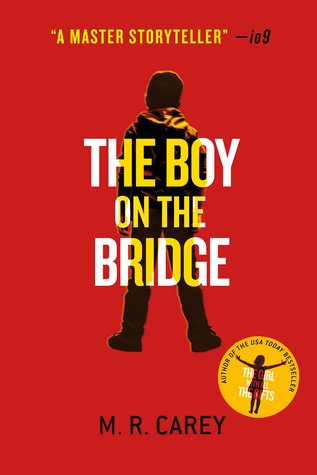
Book Review: The Boy on the Bridge

M. R. Carey's 2017 follow-up to The Girl with all the Gifts, The Boy on the Bridge works as a prequel, and once again focuses on a small group of soldiers and scientists attempting to exist after an end of the world event.

The novel takes place on a mobile science station (think tank mixed with RV) that plays an important role in the original book.  Just as with the first novel, we are given one character to view this strange new world from, but this time, there are two protagonists, a scientist and a young man named Steven Greaves, who is a quiet, perhaps autistic young man who may be the human race's last, best chance for survival.

The novel works to create an incredibly tense, paranoid situation and plays with issues of consequences and living in a perpetual state of fear.

Well worth the read.

Monday, August 29, 2016

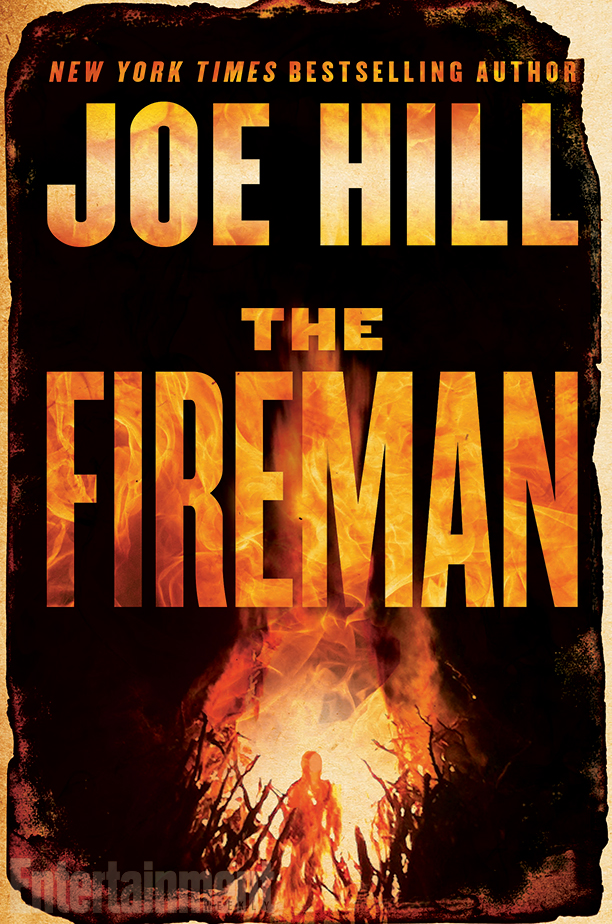
Book Review: The FIreman

Joe Hill's latest novel, The Fireman (2016) focuses on a pandemic of spontaneous combustion.

Just take a moment and think about how awful that would be; people, seemingly at random, simply erupting into flame and burning to death. Then imagine it on a global level.

Having been a long-time fan of dystopian future and post-apocalyptic fiction, I think I can honestly say this is one of the most terrifying concepts I've come across in horror fiction. The Superflu, vampire plagues, and nuclear or zombie strikes are all excellent ways to force regular characters into extraordinary circumstances, but the world Joe Hill has stuck his character Harper Willowes into may be one of the worst I've seen.

What surprised me so much about the book was how much hope and love was able to be exist in this terrible circumstance; as Harper travels through this new terrible world, everything has not simply gone bad, in fact, somethings may even be a little better.

The novel was compulsively readable, and as with his previous fiction had me hooked early. A great read, and definitely stick around through the credits and acknowledgements at the end, as the novel still has one more treat in store for the devoted reader.

Wednesday, September 24, 2014

Genre Character of the Week: Helward Mann

Last year I got pretty excited when first viewing the trailer for the Science Fiction film Snowpiercer.  The premise of that film, which focuses on a post-apocalyptic human society limited to existence on a moving train seem such a strange and unique idea I didn't think there had been anything quite like it before.

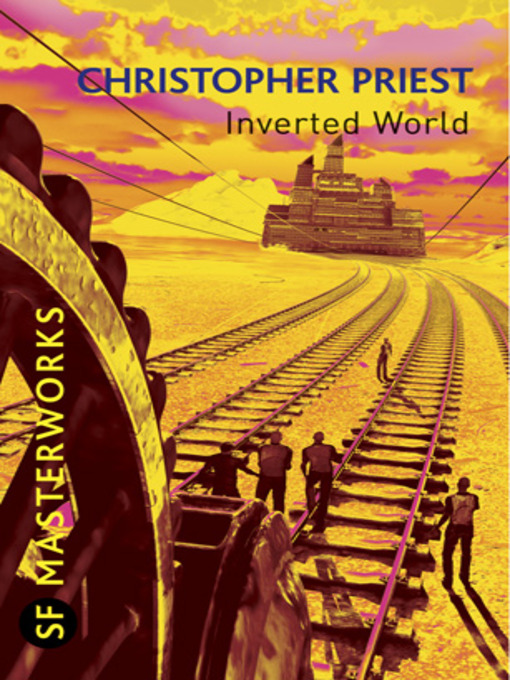
Then I read the 1974 Christopher Priest novel Inverted World.  In the novel, narrated (sometimes) by our Genre Character of the week, Helward Mann, the city "Earth" exists on rails and moves slowly across a landscape, and has been for years.  To be fair to the film, the city moves at a very slow pace, and there doesn't appear to have quite the same class divisions as described in the film, but there are enough similarities, I was comforted to know that classic SF had again touched on this idea decades ago.

What I really like about the character of Helward in the book is his position of being both the character the reader is meant to relate to, while at the same time basically being a guide to the strange world in which he exists.  His story begins with an incredibly evocative sentence:

I had reached the age of six hundred and fifty miles,

which is just an amazing way to show the reader just how different the world of this book is from ours.

Although there are a lot of places in which I disagreed with the actions Heward took, I still appreciated the way the story moves him about to best show the world in which he lives, and in the end, (sorry for the lack of spoiler here), I simply love what the author does with the character.

If you've never read it before, it is definitely worth a look.

Friday, April 11, 2014

Book Review: Walk to the End of the World

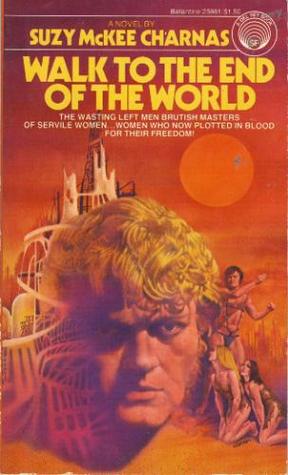
For my classic science fiction novel this month, I read the 1974 book Walk to the End of the World, by Suzy McKee Charnas.

The book takes place many generations after a world-ending event called the Wasting, wherein all of mankind's natural resources ran out and the majority of the world's population died, along with most larger animals.

In the settlement called Holdfast, society is broken up in two key ways; first by age, Seniors and Juniors, who each have specific roles and rarely interact with each other in any way that isn't antagonistic, and secondly, by gender.

In the world of the story the Wasting is now blamed on women (called fems in the novel), who were thought to be the cause of the end of the old world and have now been reduced to labour and breeding animals, not actually considered creature with souls or any value except their necessary function in continuing the human race.

As a man raised in a house of women, who has since moved into his own house (and filled it with his wife and daughters) reading the book was a bizarre experience for me, the author does a great job at creating the society and all of its rules, and by breaking the book into smaller parts and focusing each on a different character, the reader is able to get a very good idea of how this world works.

The book was followed by three sequels: Motherlines (1978), The Furies (1994), and The Conqueror's Child (1999), all of which have now been added to my list of books I hope to read this year.

A little dated in concept and writing style, but definitely a worthwhile read.

Thursday, March 22, 2012

Things I’ve Noticed: Your favourite sub-sub-genre can tell a lot about you

Let’s begin with some quick definitions.

Genre – a particular style of fiction (i.e. Horror, Romance, Science Fiction, and Crime)

Sub-Genre – a more specialized type of genre fiction (i.e. Zombie Horror, Historical Romance, Time Travel Science Fiction, and Hard Boiled Crime)

Sub-Sub-Genre – The nitty-gritty of sub-genre, where only the fans who really reallylove (obsess over) the genre go (i.e. Zombie Apocalypse, Historical Fiction that doesn't get too steamy, Time Travel Fiction ending up in a return to a changed future, and
Swedish Hardboiled Crime (Hello Steig Larson fans).

Most people have favourite genres, and I think it’s fair to say that a lot of people have favourite sub-genres, but I think the number drops significantly when you go to the fans of a sub-sub-genre.

Like me for instance – I’m personally a big fan of Horror/SF or Horror/Fantasy set in a post-apocalyptic setting. After all, why just end the world and follow the few survivors unless you’re going to throw in prophetic dreams, robots, aliens or hoards of the undead?

Probably you could simply say that I like stories which follow the Man vs. Environment theme which also touch on our consumerist nature and echo my own personal notion that in some ways the world might do better with a few years off of the grid.

At the same time my BFF Mike is a huge Star Trek fan (which you all know as you’ve made sure to check out his Star Trek episode review blog that I’ve linked to right here, right?) and I suppose that could be considered a sub-sub-genre of fiction – genre (Science Fiction), sub-genre (Space Travel), sub-sub-genre (Star Trek). And his love of Star Trek tells you is that he’ll likely be in Calgary next month and perhaps he watched Enterprise a little longer than was good for him (I gave up in season three when they explained that in the past Florida was cut in half by a giant space laser – I mean COME ON!! This was supposed to be a prequel and NOWHERE DID KIRK, SPOCK, PICARD, SISKO or JANEWAY EVER TALK ABOUT THE TIME WHEN FLORIDA WAS CUT IN HALF BY A RACE CALLED THE XINDI!!!!)

But I digress.

What I mean to say is that your personal favourite sub-sub-genre can be an excellent way for you to examine your likes and dislikes, and hopefully find other things you could check out and enjoy just as much.

Sorry about before, I promise not to talk about season three of Enterprise ever again.