Showing posts with label Horror: the 100 best books. Show all posts

Tuesday, July 8, 2014

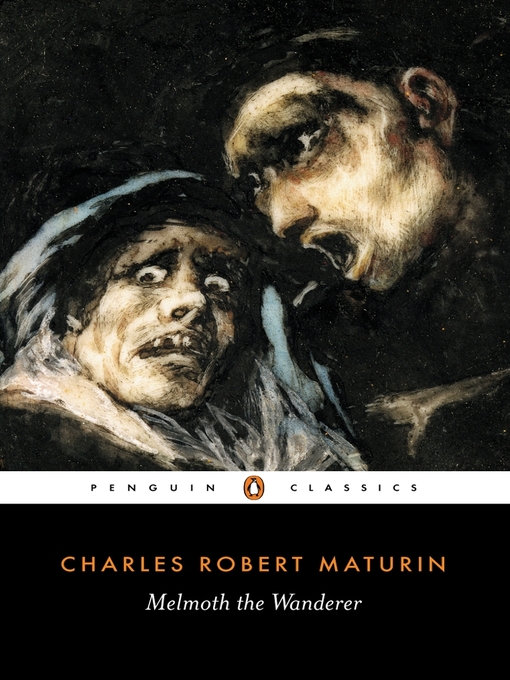
My Marathon with Melmoth

For the last few years I've been working my way through editors Kim Newman and Stephen Jones 1988 reading guide, Horror: the 100 Best Books.

At this point I've read roughly 75% of the novels and short story collections covered, which stretch back as far as Christopher Marlowe's 1592 play Doctor Faustus and as recently as Ramsey Campbell's short story collection Dark Feasts (1987).

Over the years I've read a lot of older horror novels and plays, and some of them still work as frightening reads for me today, even after multiple rereads (hello Frankenstein).

But one novel on the list ended up taking two attempts and nearly three weeks to finally get through.

Charles Robert Maturin's 1820 Gothic novel Melmoth the Wanderer, took me an awful lot of time to get through - in my first pass at the novel a few years back I didn't even manage to finish, and I'm pretty proud of the fact that I usually finish the books I've started.

I had it listed as my Horror read for June, and three weeks ago I took a deep breath and dug in.

The problem was I found myself slogging through an uphill trail of slightly outdated language that seemed to bog me down as I attempted to move through it.  Now I'll be the first to admit, my University degree is in Communications (i.e. Film, Radio & Television) studies, not English literature, so perhaps I was not grounded enough in the stories of the era to appreciate it - at the same time I've read and enjoyed Frankenstein (written two years earlier), Northanger Abbey (three years earlier) and Wuthering Heights  (27 years later), so I don't necessarily think I can simply say the writing style of the time is difficult.

What I can say I liked about the novel (sorry for the 196-year-old spoilers here), was the nesting structure of the story, wherein different aspects of the story are told in a story-within-a-story format, the imagery of many of the set pieces throughout - including one of the most negative views on monasteries I've ever come across, and the overall concept, wherein an immortal being attempts to offer his immortality to others for a simple deal that no one seems comfortable taking.

In the end, I'm glad I read the book, it had a lot of eerie imagery and some concepts that won't be leaving my mind anytime soon.  But for right now I think I'm going to be taking a break from horror novels written in the early 1800s; next up for me is Robert W. Chambers 1895 short story collection, The King in Yellow.

Tuesday, May 22, 2012

Genre Character of the Week: Magda Cuza

Last week, following my continued work through the book Horror the 100 best books, I checked out The Keep by F. Paul Wilson.  The novel is a horror novel involving a monster set in Romania during WWII, and the main character, also our genre character of the week, is a young woman named Magda Cuza.

For starters, a quick review of the book - it is a lot of fun, the atmosphere is very creepy and if like me, you are a fan of Hellboy, this book will totally be up your alley.

The premise follows a group of Nazi soldiers during World War II who are ordered to take up position in an abandoned keep in Romania.  Soon after their arrival men start dying and it quickly becomes obvious that something is killing the men.

Eventually a Jewish doctor and his daughter, Magda are sent for, as he is an expert in both Romanian folklore and this keep in particular.  Once the doctor and his daughter figure out what is going on the novel moves into high gear.

What I like about Magda is that she is both incredibly smart and also devoted to her dad (as a dad myself, this is a nice trait, although she does carry it too far).

The novel is a lot of fun and if it is not available through your local library, it is definitely worth a purchase.

Sunday, January 3, 2010

Book Review: Horror the 100 best books

Ah January, the time of year when I like to get started on an ambitious list. The weather here (Canada) is a bit chill this time of year (pictured right), so I've got a lot of time to kill in my house. I'm working my way through the New Super Mario Bros Wii game (World 3 and counting!), and am looking for a new selection of books to read.

I found today's book about two years ago and I can't say enough good things about it - so lets start.

Horror: the 100 Best Books, edited by Stephen Jones and Kim Newman, got me reading well beyond my comfort zone in horror novels. Like most people I've done the classics (Dracula, Frankenstein, etc.) and worked my way through Stephen King, so I wanted to exapnd my horizons a little.

The 100 books in question were selected by 100 different authors in the horror field and each book gets a couple of pages describing why that selection is worth looking at. Selections range from traditional horror to plays and even SF and Westerns. I think a lot of the titles are great starting points for a newcomer to horror if they want to get beyond the mainstream.

If you're looking for a great place to start exploring the genre, I can't think of a better book to point you at.

Monday, September 28, 2009

Book Review: Dark Ladies

I've been reading horror books as far back as I can remember, starting with fairy tales, Greek myths and Halloween books (I was born too young for Goosebumps, and I was too male for Christopher Pike books) and eventually moving into the mainstream with Stephen King, Dean Koontz and even a quick run through Anne Rice. A few years back I came across a book called Horror: The 100 Best books, edited by Stephen Jones and Kim Newman, and was finally able to begin a look at some really cool classic horror. I have now read a lot of horror from the 1800s - and I'll probably post on the value of reading it in a few weeks, but one of my favourite finds in the book was a novel called "Conjure Wife"(1943) by Fritz Leiber.


It is very difficult to pick a favourite book by Fritz Leiber (pictured right). I love this guy's writing, he goes from classic Fantasy (his Fafhrd and the Gray Mouser series were one of the main influences on Dungeons and Dragons) to award-winning Science Fiction (he won two Hugo awards for best Novel - The Big Time in 1958 and The Wanderer in 1965), but the books I'll be looking at today were in the horror genre.

Yup - I said books. I cheated a little, I'm using the book Dark Ladies, a collection of two of his horror books, Conjure Wife and Our Lady of Darkness (1977). When I went looking for a copy of Conjure wife, all I could find was this two-in-one edition, but the other book - Our Lady of Darkness, was both extremely Lovecraft influenced and looked a lot like one of my favourite RPGs of the 1990s, Kult (Sorry Vampire: The Masquerade, but I like the REALLY dark stuff).

Anyway, back to the reasons you should read these two books - The plots are simply awesome:

Conjure wife focuses on a college professor who comes across witchy stuff his wife is keeping, which she says she has been using for years to help his career, and in fact she says that most college professor's wives do the same thing. Being a bit of jerk, he demands that all of it be removed from the house as it is all just superstitious mumbo-jumbo. Unfortunately, at this college it isn't, and when this up-and-coming professor loses his magical protection, things get very bad VERY fast.

Our Lady of Darkness (which won the World Fantasy Award for best novel in 1978) is a little trickier as a read. If you are looking to start reading Leiber, I would only suggest this one if you are really into H.P. Lovecraft, as this book takes the ideas from his Cthulhu Mythos and updates them to 20th Century San Francisco. The book focuses on a writer who becomes aware of a cult and begins to see just how massive it's control of the city is. I really liked the book, but I am definitely a big Lovecraft fan so I have a lot of bias.

Both books are worth a read, but if Horror is not your thing, check out his Fantasy or SF, they are all older, so should be available at your local library and are some of the coolest fiction I have had the luck to come across in the last few years.