Sunday, February 28, 2016

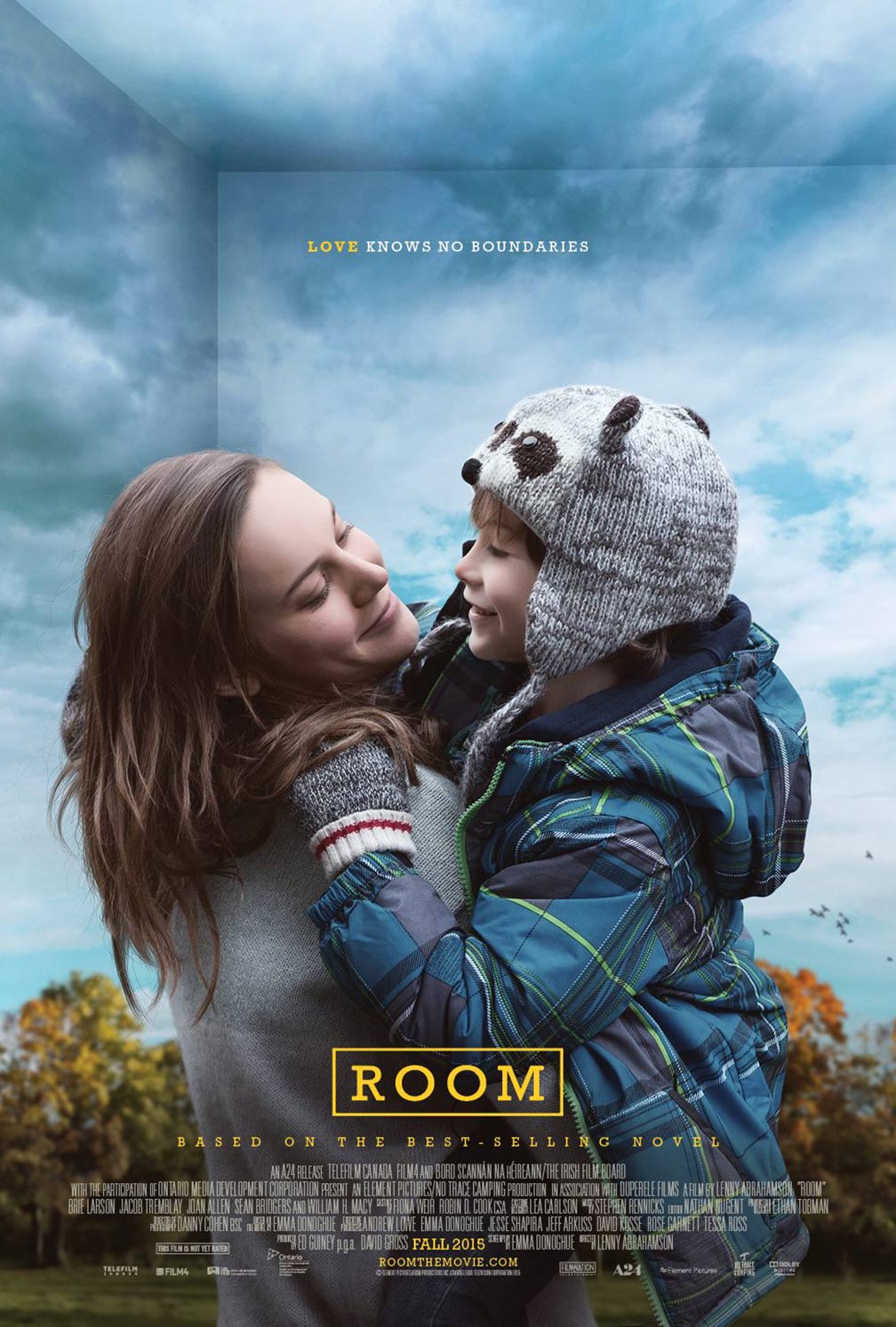
Movie Review: Room

And coming in just under the wire (literally two hours before the Oscars), I can finally say I've seen every Best Picture nomination, finishing up with Room.

Holy cats this was an intense film, based on the 2010 novel of the same name written by Emma Donoghue (who also adapted the script), the film follows a young boy named Jack (played amazingly by Jacob Tremblay) who lives in a room with his Ma (played by Brie Larson - who I will be shocked if I can't say Oscar-Winner Brie Larson by the end of tonight - that was such an amazing job!)

I don't want to get too much into the plot, but if you have the chance, and can deal with some significantly dark material, it is well worth the watch.

Saturday, February 27, 2016

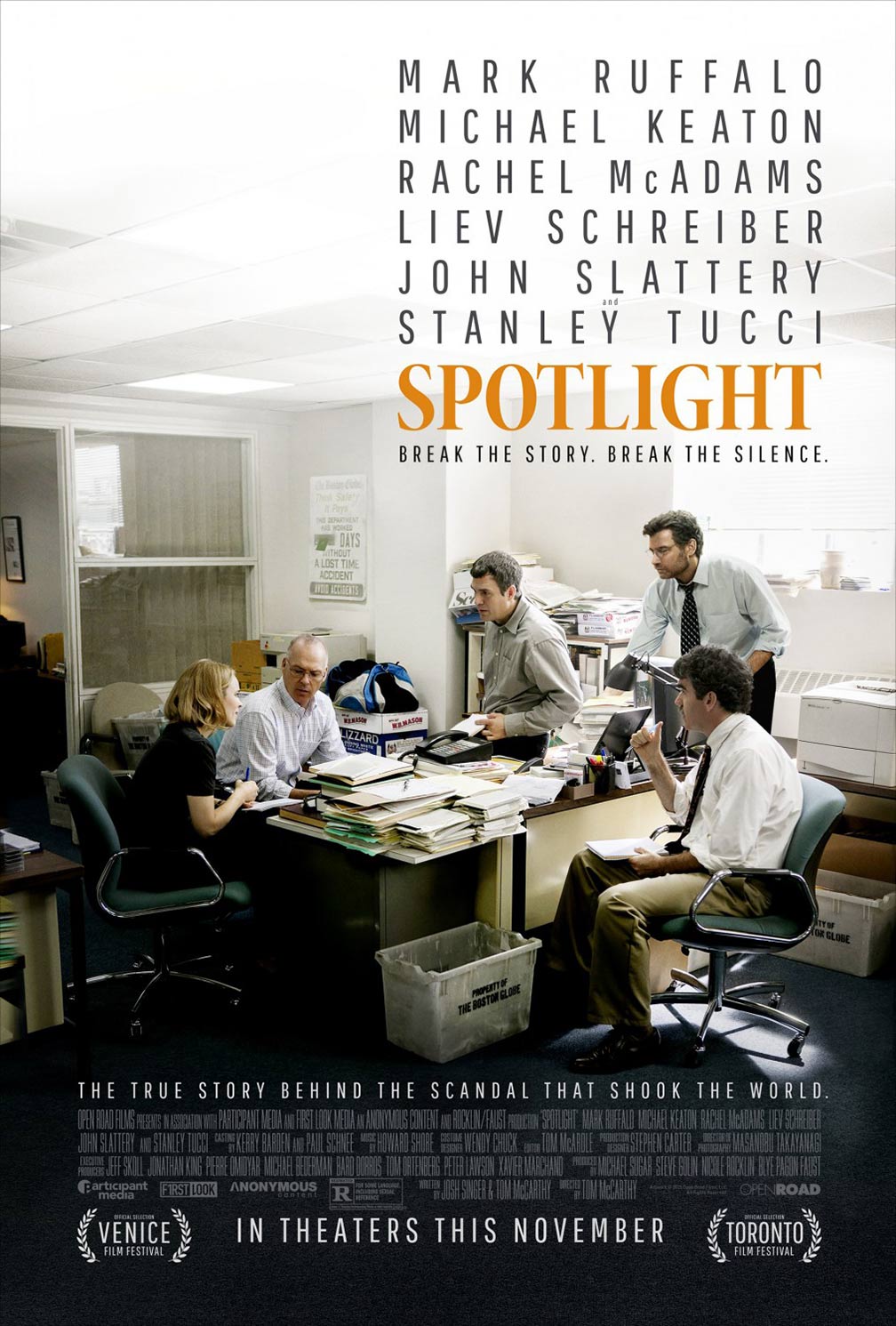
Movie Review: Spotlight

Of the eight films nominated for Best Picture at this year's Oscars, Spotlight was the one I knew the least about going in.  I was aware of the original story, but I hadn't seen any of the trailers or advertising, so I went in about as cold as I'm likely to with a movie I've gone to see.

 Nominated for six awards, Spotlight follows the deep investigation team at the Boston Globe in the early 2000's as they uncovered and reported on the child abuse scandal in the Boston Archdiocese which opened up the topic for much of the world and ended up getting the series of articles a Pullitzer for public service.

The story, considering it largely takes place in offices with people reading and/or talking on phones, moves a a really great pace, and the acting is pretty amazing.  Having just one more Best Picture nomination to see, I feel pretty confident in saying Mark Ruffalo definitely deserves the Best Supporting Actor award for his work in the film.

A really great movie, and one I'm likely to see again.

Monday, February 22, 2016

Book Review: Embassytown

A little preamble; this is my fourth China MiƩville book (King Rat, The City and the City, and Kraken), and with Embassytown, and a big part of what I love about each of these is how he plays with genre and concepts in his faction.

In Embassytown much of what we look at is alien and language. Considering how tricky human languages are here on Earth (for example, did you know that there is no term in French for cool (as in temperature?) - just take a second and think of how much that alters the average francophones world view in terms of temperature), imagine how tricky it would be for a language with absolutely no shared points of interest.

The novel follows a woman named Avice Benner Cho, a child raised on the world of Arieka in the city of Embassytown who grows up to become an "immer", someone able to travel through an area of space around the world called the immer. The world itself is shared with an alien species called the Ariekei (also referred to as The Hosts), who have a concept of language that take a while get your head around.

The novel follows some key events in the city throughout the life of Avice and focuses largely on how different cultures work to understand each other without many shared reference points - for example the aliens don't really view most humans as sentient.

Although this wasn't my first experience with SF focused on questions of language, it was definitely the most immersive one I've ever come across.

Wednesday, February 17, 2016

Movie Review: Bridge of Spies

Considering how most people view the business of espionage, either as a grim and dark job done (hopefully) well by our side and (hopefully) poorly by theirs, or as a backdrop for action adventure films like the Bond franchise, compelling stories about spies that also work to show a moral high ground are few and far between.

Steven Spielberg's Bridge of Spies, however, does just this, but shifting the focus from the actual spying to the aftermath and it's complications, by looking at two historical events; The Hollow Nickel case and the 1960 U-2 Incident, and their legal and political consequences.

Following lawyer James B. Donovan (played by Tom Hanks), the film does a remarkable job of showing a man doing a thankless task to the best of his abilities. In the first half of the film he works to defend Russian spy Rudolf Abel (played by Mark Rylance) in a system where the judge, jury, and public opinion would all like him to work against his own client, but he simply focuses on the job he has been given and works to see it through.

In many ways the film feels like a Frank Capra picture, with the little guy standing up to the system to do what's right no matter how many times he's pushed down. Coupled with the eerie feel of Cold War Berlin (watching the Wall go up was a lot more affecting than I thought it would be) and the intricacies of political maneuverings, the film also works quite well as a thriller.

An excellent film.

Tuesday, February 16, 2016

Book Reviews: The King Must Die & The Bull from the Sea

So this year, five years after finishing my Bachelors degree, I was feeling a little nostalgic for my favourite elective courses at Athabasca University, Ancient Greece, and Rome and Early Christianity I and II. Yup, we're talking Classics, and for me, a guy who majored in communication studies, I was just surprised to see how often a little knowledge of early Western Civilization would pay off in courses on Communications Theory, History, and specific communications mediums (Radio, TV, The Internet, etc.).

So I decided to take a look around for some great historical fiction to read taking place during the era and found this website: Historicalnovels.info which literally has a page entitled "The 36 Best Historical Novels for a Survey of Ancient Greek History" by David Maclaine.

The first two novels on the list were both by an English author I had never heard of, Mary Renault, and focused on a retelling of the life of Theseus (Greek Mythological Hero, sent to Crete, put in a labyrinth, fought the Minotaur), The King Must Die (1958) and The Bull From the Sea (1962).

These two books, told directly from Theseus' perspective, were incredibly immersive and painted a pretty clear picture of Bronze Age Greece. The look at the cultures displayed was fascinating, seeing the story-behind-the-legend was enlightening, and although I'll be the first to admit that historical fiction is not a fair replacement for history, it can give a flavour and context to what otherwise can come across as a series of dates, events, and names.

The first of the two books was a little better than the second, but to be fair Theseus does most of his best stuff early on, and then a lot of terrible things happen so the second book had to work within that constraint.

A fascinating beginning to the a list of books I'm looking forward to reading over the next few years.

Well worth checking out!

Wednesday, February 10, 2016

New High-Rise Trailer


So back in 2014 I did a book review of a novel called High-Rise by J.G. Ballard - sort of a class struggle/lord of the flies mashup set in the UK and maybe a little more speculative than science fiction. Either way, I was a pretty big fan, and now look here - not only are they making a movie, but the first trailer has got me pretty interested...

Man, reading all that 70s-era SF has got me excited for all sorts of stuff!

Tuesday, February 9, 2016

Book Review: The Walking Shadow

Moving towards the end of the 70's in my reading of David Pringle's Science Fiction: The 100 Best Books, Brian Stableford's The Walking Shadow (1979) takes a look at issues of time travel, futurism, and the question of destiny.

The book focuses on Paul Heisenberg, the author of a book called Science and Metascience and a scientific celebrity who, in front of thousands of people, appears to have been replaced by a perfect silver statue of himself. The statue is actually a sort of placeholder, and over a century later is replaced by Heisenberg again, who hasn't aged a day.

He now finds himself in a dystopian future, one in which many others have discovered how to jump forward in time, and who now view him as a sort of prophet. Upon awakening different factions of the government attempt to bend him to their cause while revolutionaries work to set him free.

The novel follows Heisenberg through his jumps across time and go to places few of us would expect to be waiting in our planet's future. I really don't want to go into specifics as part of the novel's structure works to have him figure out his new surroundings and attempt to find his place in it.

A fascinating read, and not likely to be my last from Stableford.