Showing posts with label Book reviews. Show all posts

Thursday, February 13, 2020

Book Review: Taaqtumi: An Anthology of Arctic Horror Stories

Having been a long time fan of Horror and recent discover of Inhabit media, an Inuit-owned publishing company in Nunavut, Canada, I was thrilled to find this collection pop up on my FaceBook feed and then delighted to see my wife had already put an order in for it when I suggested we might want to buy it.

The stories included in Taaqtumi range from Thriller to Supernatural Horror and to Science Fiction/Horror. Standouts for me included Iqsinaqtutalik Piqtuq: The Haunted Blizzard, by Aviaq Johnston (who wrote a delightful children's story called What's My Superpower that I absolutely loved in 2017), and The Door, by Ann R. Loverock, although the book has stories that would work well for both Horror fans like me and those just peeking into the genre.

An excellent collection and from a company I hope does more like it in the future.

Wednesday, January 17, 2018

Blog: Book Review: Paperbacks from Hell

While browsing through a bookstore a year and a half ago I had the delight of discovering author Grady Hendrix, who's book My Best Friend's Exorcism was both a delightful look at high school in the eighties and a really effective horror novel focusing on demonic possession. Last year I read his earlier work Horrorstör which, although not quite as good as exorcism was still a fun read and had some really great moments of tension as his characters worked their way through a haunted IKEA-style store. In some ways it reminded me of China Mieville's 2005 short story "The Ball Room", both in subject matter and high tension.

Then last year I found Hendrix's nonfiction work Paperbacks from Hell: The Twisted History of ’70s and ’80s Horror Fiction and was simply blown away. The book covers the boom of Horror paperbacks that started in the late sixties with Rosemary's Baby and ended in 1988 with Silence of the Lambs (which re branded Horror as Thriller).

The book includes everything from monsters and Satan through to V.C. Andrews and apocalypses, and although Stephen King and Anne Rice (who dominate the Horror section in any bookstore), the book is a treasure trove of the crazy stories that were published over these two decades and as a long-time horror fan I wasn't sure if I was more delighted when Hendrix examined books I loved or introduced me to titles (and series) I had never heard of before.

A really fascinating read and the cover art of these stories is well displayed and makes for a great book to dig into or just browse through.

Wednesday, August 2, 2017

Book Review: The Ten Thousand

So here's an interesting treat; Michael Curtis Ford's The Ten Thousand takes a look at one of my favourite films of the '70s, (Walter Hill's The Warriors (1979)) and tells the story that inspired the novel that the film was adapted from. This is the story of Xenophon's The Ten Thousand.

Taking place in the chaos following the Peloponnesian War and beginning in 401 BC, the novel follows Xenophon and is narrated by his servant and companion Themostigenes (nicknamed Theo), as they join an army of Greek soldiers who decide to fight as mercenaries under Cyrus the Younger in Persia, only to discover the point of their work was a lie and that they have been hired to help Cyrus kill his older brother. Things do not work out well and ten thousand Greek mercenaries quickly find themselves deep behind enemy lines with no support, little food, and most of their leaders betrayed and killed.

The novel follows the story of how (sorry for the 2500+-year-spoiler) this group made their way home. The novel begins as a war story and quickly turns into a story of survival over overwhelming obstacles. The action was fast, the story epic and I was quite happy to have purchased, rather than borrowed my own copy.

In the end, an excellent read, and an even more excellent reason to check out The Warriors again soon.

Monday, November 21, 2016

Book Review: Marathon, by Christian Cameron

Carrying forward with my journey through the Ancient world via historical novels, Christian Cameron's 2011 novel Marathon (the second in his Long War series, following Killer of Men), continues to follow the story of Arimnestos of Plataea, who begins the novel living back on his farm and working as a blacksmith, although he is quickly moved back into combat, intrigue and even some courtroom drama before the novel moves into it's second half focusing on the build-up to and eventually the actual battle of Marathon.

The novel does a really great job of painting Athens in the period (roughly 490 BCE) and in many ways I felt it actually surpassed the first novel in the series. Still following the same format, wherein an elderly Arimnestos is relaying the story to his daughter and her friends, the novel does an excellent job of painting both daily life and the daily life of soldiers in the era. In addition, naval warfare is introduced and is both exhilarating and terrifying in its intensity.

A great follow-up to the original book, and one that has ensure I'll be reading the rest of the series as soon as I can get my hands on it.

Thursday, May 5, 2016

Book Review: The Burn Palace by Stephen Dobyns

Selected for one of my monthly book clubs, Stephen Dobyns The Burn Palace was a surprisingly fun Horror Murder Mystery, which also worked as a buddy cop story to boot. The novel begins with the abduction of a baby from a small town hospital (the baby is replaced in his crib with a large snake), and quickly shifts back and forth between its many main characters, including a young boy named Hercel Jr. who ends up with a friend he didn’t ask for and (mild spoiler) one of the more horrific narratives I’ve come across in recent fiction.

Many have compared the writing to Stephen King, and although I can see the comparisons; small town setting, horrific elements, supernatural elements, a young teen or pre-teen facing things that would make adults run screaming, I found Dobyns definitely had his own flavor – and although I can’t get into my favourite bits of the novel in terms of the Supernatural elements due to spoilers, it felt like a great cop novel for me, bringing an incredibly dark idea to a small New England town.


A Hearty thumbs up!

Tuesday, February 16, 2016

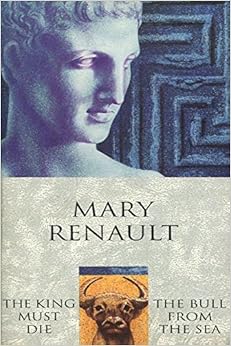
Book Reviews: The King Must Die & The Bull from the Sea

So this year, five years after finishing my Bachelors degree, I was feeling a little nostalgic for my favourite elective courses at Athabasca University, Ancient Greece, and Rome and Early Christianity I and II. Yup, we're talking Classics, and for me, a guy who majored in communication studies, I was just surprised to see how often a little knowledge of early Western Civilization would pay off in courses on Communications Theory, History, and specific communications mediums (Radio, TV, The Internet, etc.).

So I decided to take a look around for some great historical fiction to read taking place during the era and found this website: Historicalnovels.info which literally has a page entitled "The 36 Best Historical Novels for a Survey of Ancient Greek History" by David Maclaine.

The first two novels on the list were both by an English author I had never heard of, Mary Renault, and focused on a retelling of the life of Theseus (Greek Mythological Hero, sent to Crete, put in a labyrinth, fought the Minotaur), The King Must Die (1958) and The Bull From the Sea (1962).

These two books, told directly from Theseus' perspective, were incredibly immersive and painted a pretty clear picture of Bronze Age Greece. The look at the cultures displayed was fascinating, seeing the story-behind-the-legend was enlightening, and although I'll be the first to admit that historical fiction is not a fair replacement for history, it can give a flavour and context to what otherwise can come across as a series of dates, events, and names.

The first of the two books was a little better than the second, but to be fair Theseus does most of his best stuff early on, and then a lot of terrible things happen so the second book had to work within that constraint.

A fascinating beginning to the a list of books I'm looking forward to reading over the next few years.

Well worth checking out!

Wednesday, February 3, 2016

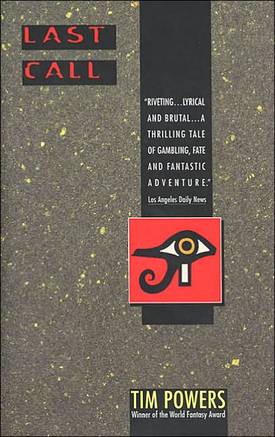
Book Review: Last Call

Working my way through the best novel winners of the World Fantasy Awards (WFA), I've discovered a lot of pretty great authors and rediscovered a few I hadn't read in a while. Tim Powers, for instance, wrote both a great fantasy novel I read years ago called The Drawing of the Dark (1979) and The Anubis Gates (1983) a pretty amazing time travel story as well.

So I was happy to return to this list after a few years and check out his 1993 WFA winner for best novel, Last Call.

The novel mixes card games and magic in a similar way to Fritz Leiber's Conjure Wife (1953), only in that one it was magic mixed with the academic world of Post Secondary Instructors and their spouses.

The book focuses on Scott Crane, a man with a complicated past, the origins of the city of Las Vegas and a magic system strongly tied in with games of chance and Tarot cards. Part of what I've loved about all of Power's books I've read is the fact that his fantastic elements seem to have so much work behind them; not only is the magic in Last Call well defined, but different characters understand it to different degrees and find it works (or doesn't work) in varied ways depending on what they are doing.

The story also ties in with the legend of The Fisher King, includes ghosts, questions of destiny, and family relationships. Although it did take me almost a week to read, I found the book to be quite engrossing and plan to check out the sequel Expiration Date (1995) later this month.

Thursday, September 3, 2015

Book Review: Modern Romance

So let me start by admitting that I'm a big fan of books by comedians; whether learning about American history through Jon Stewart or Nick Offerman, or reading a fun autobiography by Amy Poehler or Tina Fey (which had me laughing so hard I drew uncomfortable stares on the bus - a near-criminal public display up here in Canada), if any comedian I enjoy puts pen to paper, I'm likely to give their efforts a try.

So earlier this week I picked up Aziz Ansari's first book, Modern Romance, expecting a look at the actors life when I was stunned to find out the book was largely focused on the issue of romance and relationships in the era of social media.  Also to be fair, I'm sure most people already knew this, as I would have had I looked into anything about the book or even read the back cover.

Co written by sociologist Eric Klinenberg, the book works as a really great piece of creative non-fiction, is well-researched and includes interviews and references to authors such as Clay Shirky and Sherry Turkle.

The book was a pretty fascinating look at how people are meeting, dating, and marrying each other these days and as a communications studies major, played directly into the stuff I love to read for fun.

This may be my favourite non-fiction book of 2015.


Monday, April 22, 2013

Book Review: Reality is Broken

As I’ve said in the past, I’m beginning to become a bigger fan of nonfiction writing; whether history or cultural commentary, I find it an interesting addition to my monthly readings into Fantasy, Horror and Science Fiction.


Case in Point: Jane McGonigal’s Reality is Broken: Why Games Make Us Better and How They Can Change the World – which was a pretty interesting examination into why more and more people are spending huge amounts of their free time fighting virtual robots, unicorns and zombies. The book examines the draw that these games have (for example, feelings of productivity, useful and clearly spelled out missions, and huge emotional benefits for success and helping with the success of others) and how these attributes can be added to our real-world experience, therefore making reality an equally fun place to play.

The book reads really well – although I don’t personally have a background in game theory, I sure didn’t feel spoken down to, and I wasn’t lost in any of the author’s concepts either.  The arguments were pretty straight forward, and even though there are a few real world problems that game design might not be able to help directly, the vast number of things game design can help is pretty impressive.

I’d recommend the book for anyone who either considers gaming a waste of time, or has been told gaming is a waste of time.  The book got me pretty excited about the things in my own life I can try to modify with game design and has given me both the confidence and the interest in trying it out.

Monday, January 7, 2013

Book Review: She Wakes


For the last few months I’ve been reading the early novels of Jack Ketchum, the first three, Off Season, Hide & Seek, and Cover – were all effective horror stories showing a very dark version of our world – no supernatural monsters, aliens or ghosts involved, just a shocking and often terrifying look at what one human being can do to another.

Last week I finished Ketchum’s fourth published book, She Wakes, which involves a supernatural evil and is set in Greece .  To be fair, I’ve always been a big fan of Classical Mythology (which is probably why I enjoyed the Percy Jackson and Latro of the Mists books), but even with the basic knowledge that gave me going in I was shocked (in a good way) at how well Mr. Ketchum put together this story, which starts out eerie, moves into ominous and ends like a hiker seeing an approaching avalanche from the valley below.

For fans of Supernatural horror it is a great read.  For me it was another example of how well this man knows his craft

Sunday, November 4, 2012

Book Reviews: Little Fuzzy / Fuzzy Nation

For one of my book clubs last month I read the novel Fuzzy Nation by John Scalzi, who wrote one of my favourite Science Fiction novels of the last few years, Old Man's War.  The book is a reboot of the 1962 H. Beam Piper novel, Little Fuzzy.


So, being me - I decided to read both.

Little Fuzzy (pictured left), tells the story of a miner named Jack Holloway, who while looking for fossilized rocks called sunstones on a far off planet discovers what may be a new life form, adorable little creatures he calls Fuzzies, who may or may not be sentient creatures, which if it turns out they are sentient, would mean that the prospecting on their planet is entirely illegal.  What starts out as an adventure novel ends up as a courtroom drama and it is pretty awesome - read it if you can find it, it was a lot of fun.


John Scalzi's 2011 novel, Fuzzy Nation (Pictured right) tells the story of a miner named Jack Holloway, who while looking for fossilized rocks called sunstones on a far off planet discovers what may be a new life form, adorable little creatures he calls Fuzzies, who may or may not be sentient creatures, which if it turns out they are sentient, would mean that the prospecting on their planet is entirely illegal. The story is basically identical to Little Fuzzy, but with more action, and the Holloway character is portrayed as more of a rough-and-tumble loner, than the grizzled-prospector type in the earlier novel.

Both books are fun, well worth your time, and although they cover the same bases, they each bring a very different feel to the concepts of big business, colonialism, and decency.

Sunday, September 16, 2012

Book Review: The Long Earth


One of my favourite experiences in finding a new writer is when I’ve finally caught up with their published works and can start waiting for the new ones along with all their other fans.  For the past few years Terry Pratchett has been one of those I look forward to the most.  I read his discworld series and every other published book I of his I could get my hands on from 2004 – 2010 at the rate of one book a month and loved every one of them.
 
Last week I got a hold of his newest novel (co-authored with Stephen Baxter) The Long Earth, which I would describe as a science fiction novel taking place in a multiverse that borrows heavily from Larry Niven’s Ringworld and from Clifford D. Simaks Ring Around the Sun.
 
The story takes place on an alternate Earth where one day the plans for a dimensional hopper are transmitted around the globe through the Internet and soon the vast majority of Earth’s population begin travelling up and down (or, East and West as described in the book) many multiple Earths.  There is one strange thing however.
 
People don’t seem to exist in any of these Earths except our own.
 
The main character of the book is a young man named Joshua Valienté who is a particularly gifted “Stepper”, being someone who can step from world to world without the need for the gizmo virtually everyone else has to use.  Like Ringworld, the novel is very much a story of exploration, and although I did miss the standard footnotes which can sometimes be some of my favourite bits of any Pratchett novel, I did find the book to be fun, intriguing, and definitely worth the read.

Sunday, July 8, 2012

Book Review: The Wind Through the Keyhole

Long-time readers of my blog will know I've got a soft spot for Stephen King, and specifically for this Dark Tower series, which happens to be one of my favourite fantasy series of all time (actually I suppose it might be my favourite Fantasy/Horror/Science Fiction series of all time, but I reserve the right to change that as I go along).  So when the book The Wind Through the Keyhole came out a few months back, I was cautious, but excited.


Cautious because the book is one of those "in-between" novels, which would fit between books four and five of the main series, and those are always a bit of a harder sell for me - I mean, I already know how everything worked out, why exactly do I care about an event that happened between the books I read five and six books back (the series overlaps with almost eighteen other books by the author, so to read the entire story you are looking at about a 22-book commitment).


Excited because these are some of my favourite characters in genre fiction and I was really excited to revisit them.


So in a nutshell - the book is great - it tells a story within a story within a story, and then brings you out again, sort of like Cloud Atlas, but with much more Dark Tower-y goodness.


The story is packed with action, thrills and enough robotics that I think my BFF Mike would like it (I got him to read the whole Dark Tower series, tie-ins and all a few years back and he liked that too!), and if you are a fan you should totally check it out.


If you haven't read any Dark Tower stories yet, go back to The Gunslinger.  It's totally worth your time and leads to an amazing series.

Sunday, June 17, 2012

You Got Your Star Wars all over my Zombies!


For my long-time readers this isn’t really news, but for the few of you who haven’t been here before, here is some important background info: 1) I (Bookmonkey) love horror, 2) Zombie stories are some of my favourite examples of the sub-genre, 3) I’m not really a fan of mash-ups.

My problem with mash-ups comes down to the cultural juggernaut that is Glee.  Basically, rather than write songs of their own, they spent a lot of the first season wrecking personal favourite songs of mine (I stopped watching about halfway through the season), and in the sixth episode the concept of the Mash-up was introduced to popular culture, (NOTE: Of course I know mash-ups have been in existence for over a decade now) or at least to me, which meant that the show could ruin twice as many of my favourite songs at a time.

Literary mash-ups really got going recently with the introduction of the book Pride & Prejudice and Zombies, by Seth Graham-Smith.  Interestingly enough the very same month P&P&Z came out, a little book by Joe Schreiber also came out, called Star Wars: Death Troopers.

In addition to loving zombies (well, loving zombie stories, I wouldn’t want to have any over for dinner), I am a pretty big fan of Star War.  I’m not as good a fan as my BFF Mike (who has written his own review of Death Troopers here), for instance I still prefer to call the Ithorian Momaw Nadon Hammerhead, because that’s what I called him for years.  Anyway, as Mike and I have been reading parallel genre fiction for years (he focuses on Science Fiction while I tend to focus on Horror) it is a pretty rare story that brings us together.  Last time it was the Canadian horror film Splice.

The book is really fast.  Clocking in at 234 pages I read the whole thing in about two days of bus trips, coffee breaks and lunches.  The story follows a traditional biological-based zombie outbreak (think ...28 days later) set on a prison ship about a year before the events of Star Wars: A New Hope.

I actually found the book to be a lot of fun – it was considerably less gruesome than the last zombie book I read (the classic Zombie anthology Book of the Dead – more on that next week), and the Star Wars stuff didn’t overwhelm the delicious taste of zombie (again I mean figuratively, who on earth would eat literal zombie?).  Did the story work?  Absolutely, it was fun, scary and probably a little more visceral than most Star Wars fans are used to.

I guess it could be considered a gateway book for fans of Space Opera who really need to up their zombie quotient (which by the way is all of them!)

Sunday, June 10, 2012

Book Review: Downward to the Earth

Last week I continued on my way through classic SF into the 1970s with Robert Silverberg's classic, Downward to the Earth.  A story of a man seeking redemption and understanding form the people and places he has wronged, the book focuses on a man named Edmund Gunderson who used to be the colonial advisor to a planet called Belzagor (called Holman's World when Gunderson was in charge) the planet has been relinquished back to its indigenous population, an elephant-like reach called the nildoror, who have requested all Earth-men and Earth-technology be removed from the planet as it fails.

The book is clearly heavily influenced by Joseph Conrad's Heart of Darkenss (one of my favourite horror stories, BTW), in themes, names of characters and even descriptions.  The story moves along very well and if I hadn't already had another character in mind for this Wednesday, Edmund would certainly have ended up as a Genre Character of the week.

The novel was intriguing, thought-provoking, and emotionally effective.  At 165 pages I would strongly recommend it for anyone interested in giving SF a try.

Tuesday, June 5, 2012

Genre Character of the Week: Captain Cirocco Jones

For one of my book clubs last month I checked out the 1979 Science Fiction novel Titan by John Varley.  The story focuses on the crew of the Ringmaster, an exploratory spaceship near Saturn which has discovered a new moon.

(Mild 33-year-old Spoiler) Then the moon eats them.

Some time later our main character (and this week's genre character) Captain Cirocco Jones bursts out from the ground and begins the work of finding her friends and finding her way home.

The novel is one of discovery, as our characters have awakened inside this new moon and have a strange new world to explore filled with giant air-wales, centaurs and blood-thirsty angels.

What I liked about the book was its great sense of adventure and the specifically the character of Captain Jones, who decides that this world must have some sort of overseer and decides to go find them.

The novel is the first in a trilogy, and although I'm not sure if I'd follow up with the next two, it was a lot of fun, and definitely worth a read.

Sunday, June 3, 2012

Book Review: Hide and Seek

Jack Ketchum has been a horror writer on my radar for some time now - actually for almost a decade, his novel The Lost went up against Neil Gaiman's American Gods for the Bram Stoker award for Best Novel back in 2001 and from that point on I thought I picked up a couple of his books here and there during used-bookstore runs over the years, waiting until I have a few in publication order to check them out.


A few months ago I read his first novel, Off Season, which was both quite good and really graphically horrific.  Let's just say I wouldn't recommend it to someone new to the genre, it was a modern (well, 1981) retelling of the legend of Sawney Bean (which you can read about here!) The book was both acclaimed by horror writers and censored like crazy.


Unfortunately, that kind of attention for a first novel meant that his second, Hide and Seek, was much harder for me to find during my expeditions to used-bookstores and eventually I simply broke down and ordered myself a copy.


Hide and Seek is a coming of age story that builds a surprising level of character development into 165 pages and ends with a grown up version of the children's game that goes horribly, horribly wrong.


The story follows a young man in a small town who has a summer romance with a girl who is both captivating and clearly emotionally damaged almost from the start.  Throughout the whole book there is a building atmosphere of horror as you know something just terrible is going to happen to this couple, and when it hits, it's really bad.


The thing that really struck me about this book was just how great the character development was, there were all these quiet moments and shocking moments and in a lot of ways it was really easy to fall into this whirlwind romance, increadibly intense and really real feeling.


If you can get your hands on it, this is a really engrossing read, but I will warn you, it gets pretty hard to read towards the end.

Monday, April 9, 2012

Book Review: Earthbound by Richard Matheson

My continuing journey through the works of Richard Matheson led me to the 1982 novel Earthbound this week (which he wrote under the pseudonym Logan Swanson), and it was pretty darn cool.

Having recently read his What Dreams May Come, which could basically be described as a romance set in the afterlife, this book is a lot darker, a little spookier and definitely more adult in nature.

The novel follows a married couple, David and Ellen Cooper, who have travelled back to the site of their honeymoon to try and rekindle the romance of their marriage as well as get over an affair David has recently had.

Unfortunately, the little cottage they stay in has another resident, a beautiful and mysterious woman named Marianna, who takes an immediate and intense interest in David.

The novel was a lot of fun, I enjoyed the fact that both the leads were in their forties (they are soon-to-be-grandparents) and found the atmosphere pretty interesting. The novel is described an erotic ghost story, so be warned, some of the book gets pretty graphic.

Overall a lot of fun, and leaves me looking forward to his next novel, a western called Journal of the Gun Years.

Sunday, March 25, 2012

Book Review: Doomsday Book

Okay, a quick top five list:

Bookmonkesy's top five favourite time travel stories

5. Bring the Jubilee by Ward Churchill - short, to the point, and an excellent example of of great time-travel fiction

4. Futurama, created by Matt Groening and developed by Groening and David X. Cohen - sure it's a TV series, and sure the major time-travel element is that of a modern-day guy being put on ice for a thousand years and waking up in the future, but you know what - it's great and if you haven't watched it before you need to re-think some of your science-fiction-watching choices.

3. The Time Machine, by H.G. Wells - and yes I'm talking about the novel here - although the many film adaptations were also pretty fun. A victorian-era traveller experiments with his fancy new time machine and adventure! Terrifying, thrilling adventure!

2. Doomsday Book, by Connie Willis - I read this last week and it is really great. Following an undergraduate student at Oxford in the future who for her history practicum travels back to to the middle ages. There's just one problem - she ends up landing smack dab in the middle of the black plague and an eerily-similar outbreak happens in the future among the scientists who sent her back. The story is heavy on character and balances well between the horror that was the plague with moments of high drama and comedy as well. A great read and I am totally looking forward to the rest of the books in this series.

1. The Back to the Future Trilogy - no explanation necessary.

Sunday, February 19, 2012

Book Review: Before I Go To Sleep

One of the things I love best about my wife is that she is not afraid to stop me from doing whatever I’m currently doing and then tell me what I should be doing instead. Okay, maybe that bothers me a little when it comes to chores vs. Videogames, but when it comes to reading, she’s the best.
Case in point, I was about to start Jack Whyte’s The Eagles Brood on Tuesday (which I’ll be reading next week) when she thrust a book at me and said;

“Stop reading whatever you’re reading, you have to read this!”

And then she gave me a copy of S.J. Watson’s Before I Go To Sleep.

Before the review proper – Thanks Hon, you were, as always, right about the fact that I would love the book you suggested, and if it wasn’t for you I’d probably still only be readingDragonlance novels (Sorry Dragonlance lovers, I’m mostly saying that she opened my eyes to a whole new world of genre fiction).

Anyway, Before I Go To Sleep is a first Novel, and like the last first novel I read Joe Hill’s Heart-Shaped Box, it is fun, raw and has introduced me to a very engaging new voice in fiction.

I guess I can explain the novel as follows – think of the 2004 romantic comedy Fifty First Dates, but imagine the story is a thriller and told from the amnesiacs point of view.

I really want to say more, but I don’t want to ruin anything. It is really, really good.

Go read this book.